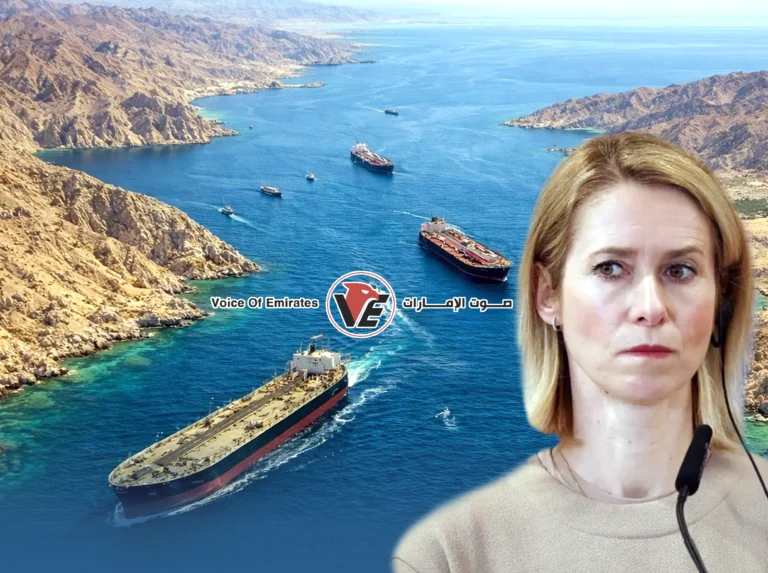
Brussels, Belgium – In a diplomatic initiative aimed at containing the global economic fallout of a war in Iran, EU foreign policy chief Kaja Kalas has proposed an international mechanism in the Strait of Hormuz.
The mechanism is modeled on the “Black Sea model” used to secure Ukrainian grain exports.
Safe passage for energy and food
Following a meeting of EU foreign ministers in Brussels, Callas explained that she had discussed with UN Secretary-General António Guterres the possibility of establishing a secure shipping corridor under international supervision.
This proposal aims to ensure the continued flow of oil, gas, and fertilizer supplies through the Strait of Hormuz,
a vital waterway through which one-fifth of the world’s energy supply passes.
The proposal seeks to reduce military tensions without requiring an immediate,
comprehensive political agreement between the warring parties.
Callas warned that the continued closure of the Strait of Hormuz due to the “Iranian war”
(which began on February 28) would have “dire consequences for the global economy.”
She also noted that the current fertilizer shortage could lead to a global food crisis next year.
She further emphasized that the time has come to end this conflict, which has caused oil prices to rise by 40%.
The repercussions of the war and Europe’s stance
In a related context, Callas emphasized that the European Union is in contact with all parties to discuss ways
to de-escalate tensions and ensure maritime security.
She also reiterated that the EU has no interest in energy agreements with Russia.
She affirmed the continuation of the policy of reducing dependence on Russian fossil fuels and preventing Moscow from reaping additional profits.
This comes as a result of the price hikes caused by the Strait of Hormuz crisis.
Callas further explained that the EU is considering expanding the mandate of Operation Aspidas.
Therefore, ministers are discussing the possibility of amending the mandate of the European naval mission
(which protects ships in the Red Sea) to include operations in the Gulf region and the Strait of Hormuz.
These moves come at a time of increasing international pressure,
particularly following US President Donald Trump’s call for Washington’s allies to contribute
to securing the vital shipping lane, where shipping traffic has been almost completely disrupted.