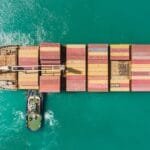
Voice of Emirates – With escalating tensions in the Arabian Gulf region and growing concerns about disruptions to shipping in the Strait of Hormuz, strategic affairs experts are suggesting that the United States, under the leadership of Donald Trump, might form a broad international coalition to ensure the security of navigation in this vital waterway. The Strait of Hormuz is one of the world’s most important energy arteries, with approximately one-fifth of the world’s seaborne oil trade passing through it. In addition, significant quantities of liquefied natural gas also transit through it. Therefore, any disruption to shipping traffic in this strait immediately impacts energy prices and global financial markets. It also creates a state of anxiety for major industrialized nations that rely on oil imports.
Signs of a US-led maritime coalition
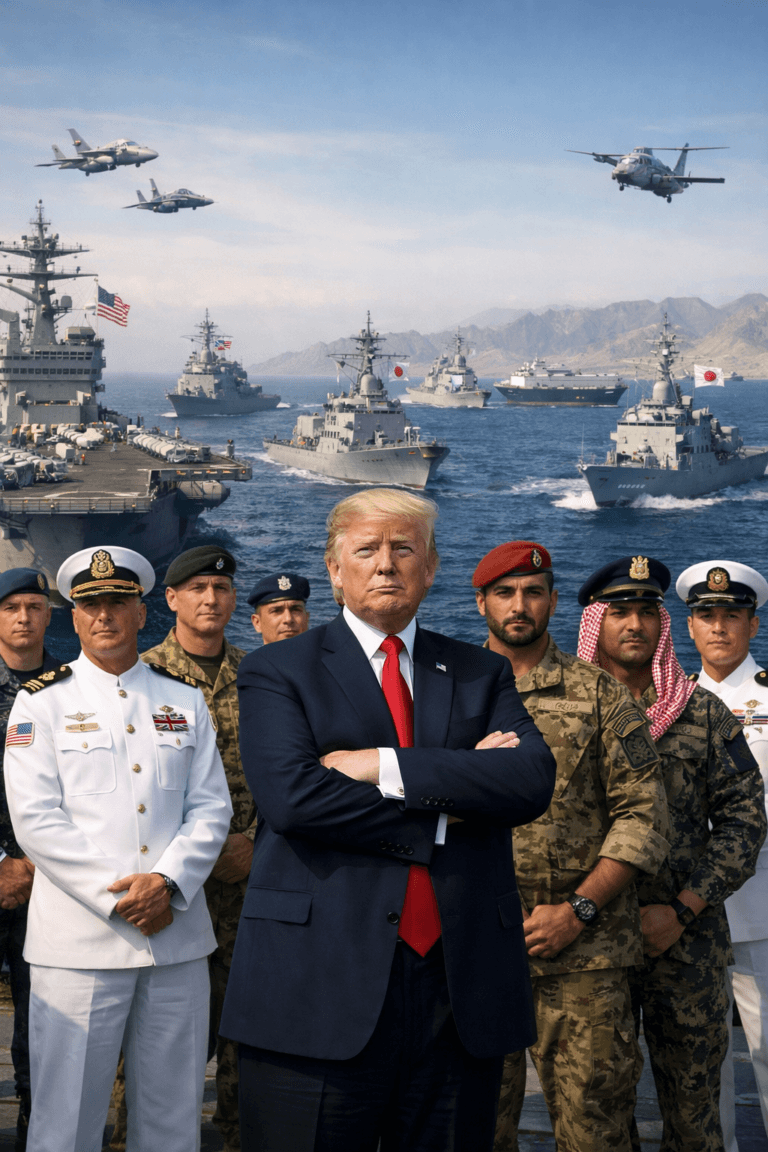
American researcher Irina Tsukerman, a prominent member of the Republican Party, told “Sawt Al Emarat” that recent political and military indicators suggest the Trump administration is leaning toward establishing a multilateral maritime security framework aimed at ensuring the safe passage of commercial vessels and oil tankers through the Strait of Hormuz. Tsukerman explained that a series of American diplomatic and military moves reflect a trend toward sustainable maritime security management in the region. This is not merely a temporary reaction to a specific incident. She believes that Washington’s behavior in recent months demonstrates a desire to establish a long-term security cooperation structure. This comes especially after the Iranian harassment of oil tankers in the Gulf.
The impact of tensions on energy markets
Tsukerman says that any concerning maritime activity in the strait is quickly reflected in global markets. Increased risk in this region typically leads to higher ship insurance premiums and increased shipping costs, which in turn affect oil and gas prices. The sensitivity of these markets stems from a clear geographical fact: approximately 20% of the world’s traded oil passes through this narrow waterway. Therefore, any disruption to shipping could lead to widespread disruptions in energy supplies and directly impact the economies of major industrialized nations in Asia and Europe.
Consultations with energy-importing countries
The American researcher pointed out that several countries heavily reliant on energy imports from the Gulf have already begun consultations with Washington on ways to protect maritime supply lines. These countries include Japan and South Korea, which import most of their oil needs via the Strait of Hormuz. Many European countries also fear that the effects of any crisis in the Strait would spill over into their economies through higher energy prices and increased inflation. For this reason, these countries are seriously considering participating in security arrangements aimed at protecting navigation in the Gulf, according to Zuckerman.
Trump’s vision for burden-sharing
The researcher points out that the Trump administration’s approach reflects a political vision repeatedly expressed by the US president: that protecting maritime security in international waterways should not remain solely the financial and military responsibility of the United States. According to Zuckerman, Washington seeks to distribute the burden among the countries that benefit from stable trade and energy flows in the Gulf. Discussions with allies focus on the principle of proportional contribution, whereby each country participates in efforts to secure navigation in proportion to its dependence on energy transiting the strait.
Sea convoy option
From a military perspective, U.S. Navy planners at the Department of Defense view the system of escorting merchant ships with maritime convoys as one of the fastest ways to stabilize threatened sea lanes. This model is based on historical experience, most notably the protection of oil tankers during the so-called “Tanker War” of the 1980s, which occurred during the Iran-Iraq War. These operations successfully reduced attacks on merchant vessels thanks to a constant naval presence. This also increased the cost of any potential attack.
Increased military presence in the Gulf
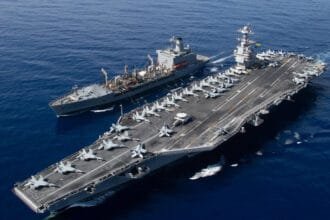
Recent military indicators also point to a US readiness for a long-term presence in the region. Additional destroyers equipped with advanced air defense systems have been deployed, along with ships specializing in mine countermeasures, according to the American researcher. Maritime reconnaissance aircraft have also intensified their patrols in the Gulf and the Gulf of Oman to monitor military movements. Meanwhile, US Navy amphibious readiness groups provide a rapid response capability to unconventional threats such as fast boats and drones.
A cautious European stance
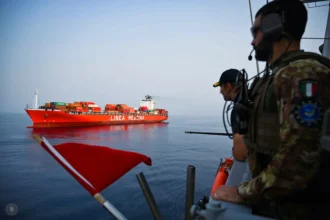
Internationally, European governments appear cautiously open to the idea of participating in any maritime coalition to protect shipping in the Gulf, but only within politically acceptable domestic limits, according to Zuckerman. She adds that the United Kingdom traditionally maintains a naval presence east of the Suez Canal and possesses advanced mine-clearing capabilities. These capabilities are vital in the Gulf environment. France also has a permanent naval base in Abu Dhabi, and freedom of navigation is a crucial component of its security strategy in the Indo-Pacific region.
Asian accounts
In Asia, discussions about participating in a potential coalition are focused more on economic and energy security considerations than military ones. Japan recognizes that any disruption in the Strait of Hormuz would directly impact its industrial economy, despite constitutional constraints on its overseas military operations, according to Zuckerman. South Korea is considering participation from the perspective of maintaining stable energy supplies and bolstering the credibility of its security alliance with the United States. India is also closely monitoring developments due to its heavy reliance on oil from the Gulf.
The Chinese dimension in the equation
The American researcher argues that Chinese calculations add a significant dimension to this strategic equation. China is the world’s largest oil importer and heavily reliant on energy supplies from the Gulf. With its expanding navy and the growth of its Belt and Road Initiative, the security of maritime routes has become a vital issue for Beijing. While China’s participation in any Washington-led coalition seems politically unlikely, it is closely monitoring developments due to their direct impact on the Chinese economy, according to Zuckerman.
Iran’s strategy in the Strait
In contrast, Iran employs an asymmetric maritime strategy aimed at increasing the risks faced by ships transiting the Strait without engaging in a large-scale conventional naval confrontation. These tactics include the use of fast attack craft, the deployment of sea mines, and the launching of surveillance drones. They also include the deployment of coastal missiles. These actions are intended to create uncertainty for shipping and insurance companies and drive up maritime transport costs.
The strait as a strategic deterrent
For his part, former Yemeni Foreign Minister Khaled al-Yamani believes that the Strait of Hormuz represents a key strategic deterrent for Iran in any potential confrontation with the United States. Al-Yamani adds, in an interview with X, that according to several assessments, Tehran considers the ability to influence maritime traffic within the strait a powerful tool for exerting pressure on the global economy, helping it to counterbalance American military superiority. Conversely, the United States seeks to neutralize this leverage by ensuring freedom of navigation in the strait. Some military analyses suggest that the American strategy might begin with protecting tankers and targeting coastal missile platforms and sea mines if necessary, according to al-Yamani. However, experts warn that any military confrontation in the strait would not be merely a limited naval engagement, but a true test of the deterrence equation in the Gulf.
A conflict that could shake the global economy
Ultimately, many analysts summarize the potential conflict over the Strait of Hormuz in a clear equation: Iran possesses the capability to temporarily disrupt the global economy by threatening shipping, while the United States has sufficient military power to reopen the waterway. Between these two opposing forces, the Strait of Hormuz remains one of the world’s most dangerous geopolitical flashpoints. Any minor incident could quickly escalate into an international crisis with far-reaching global economic consequences.