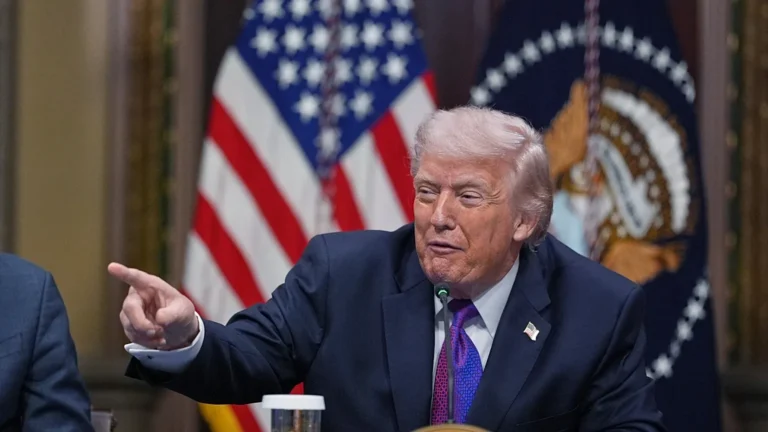
Washington, DC – US President Donald Trump threatened on Sunday not to sign any new legislation until Congress approves a bill concerning voter registration requirements. This move represents a new escalation in the political confrontation within the United States ahead of the midterm elections scheduled for November.
Pressure to pass an electoral law
Trump stated in a post on Truth Social that, as President of the United States, he will not sign any further legislation until the “Save America Act,” which aims to tighten voter registration requirements, is passed.
The bill would require citizens to provide proof of citizenship when registering to vote. It also stipulates criminal penalties for election officials who register anyone without the required documentation.
The Republican-controlled House of Representatives passed the bill last February. However, it faces significant obstacles in the Senate.
Obstacles in the Senate
Passing the bill in the Senate requires at least 60 votes to override filibuster rules. This means Republicans would need the support of several Democrats.
But that support seems unlikely at the moment, given Democratic opposition to the legislation, which they consider to be restricting voting rights.
Senate Democratic Leader Chuck Schumer warned that the bill could disenfranchise millions of Americans.
Threat of executive action
Trump’s threat came days after he suggested he might bypass Congress by issuing an executive order imposing stricter voter ID requirements if lawmakers failed to pass the legislation.
However, it remains unclear whether the president will follow through on his threat to withhold other legislation. Constitutional rules stipulate that any bill becomes law if the president does not act on it within ten days while Congress is in session.
This controversy comes at a time of heightened political tension in the United States. Both the Republican and Democratic parties are vying to strengthen their positions ahead of the midterm elections, which could reshape the balance of power in Congress.