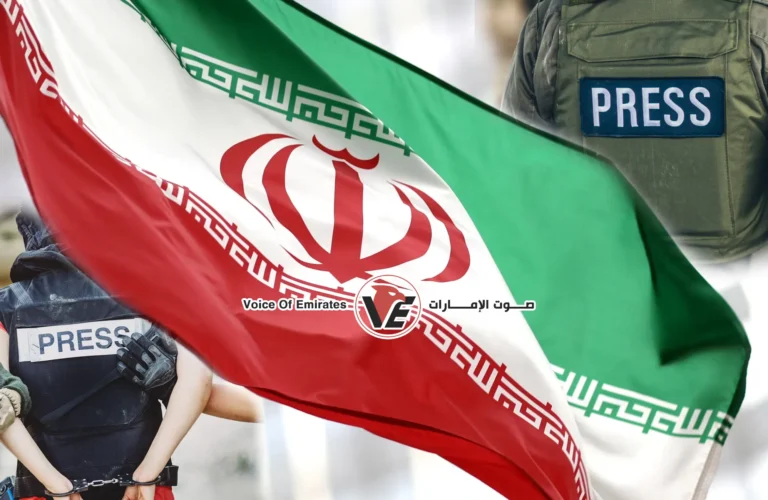
Tehran, Iran – In a move reflecting heightened security concerns and fears of media infiltration of the home front, Iran’s Ministry of Culture and Islamic Guidance sent a strongly worded letter to foreign media representatives accredited within the country.
The letter, delivered amidst the ongoing military confrontation, was not merely a protocolary reminder.
It included a series of “strict restrictions and requirements” that effectively define
the boundaries of what can be termed journalistic coverage in “wartime conditions.”
List of prohibitions: Concealing “strike results”
The ministry based its statement on a previous directive issued in February
concerning the “prohibition of disseminating information during wartime.”
Under the new directive, the publication of any images, whether recorded or live-streamed,
containing detailed information about the locations targeted
by enemy attacks within Iranian territory is strictly prohibited.
The prohibition did not stop there.
It also included a complete ban on monitoring or photographing enemy missiles,
tracking Iranian attack sites, or even missile launch and interception locations.
The ministry emphasized that any such information requires “prior approval from the General Staff of the Armed Forces.”
This restriction is clearly intended to prevent the enemy from conducting
a “battle damage assessment” based on publicly available news reports.
Psychological warfare and the image of “the leader and the institution”
The message touched on a more sensitive issue concerning public opinion and morale, prohibiting media outlets from publishing any news or reports that referred to “enemy strength” or any content that could “weaken the country’s image.”
The ministry considered addressing issues that raise concerns or “incite public opinion” a clear violation of the directives.
In a direct effort to protect the military establishment, the announcement banned
any journalistic material that could “weaken or harm the leaders and institutions of the army and security forces.”
This clause places foreign journalists in legal jeopardy. In effect, any criticism of military
or security performance could be interpreted as a threat to national security during wartime.
Statistics monopoly: No figures except from the “official spokesperson”
Regarding human and material losses, Iranian authorities have instructed foreign correspondents—including international networks like CNN, whose correspondent Frederick Plettgen and his team are currently in Tehran—not to report any statistics on the dead or wounded, whether military or civilian, unless officially released by the designated spokesperson for each department.
The message concludes by urging media outlets to disregard what it calls “fake news and misinformation,”
implicitly emphasizing the need to rely solely on the official state narrative.
Background of repression and context of “free flow”
Observers and human rights activists believe these measures are part of
a systematic policy to suppress the media and restrict the free flow of information.
Iranian history is replete with such actions; this situation is reminiscent of what happened after the 2009 protests,
when authorities arrested or expelled most foreign journalists to control the narrative on the ground.
These restrictions come at a sensitive time for the region, as regional conflicts intensify,
placing Iran in direct confrontation with Israel and the United States.
While international networks strive to reach Tehran to report on events,
the Ministry of Culture and Islamic Guidance appears to have already erected barbed wire around cameras and journalists’ pens.
Thus, the press has been transformed from the “fourth estate” into a tool serving the state’s “war effort,” or into a complete silence awaiting security approval.