Aden, Yemen – In a surprise political and security move that observers believe could push the southern provinces toward a new wave of unrest and tension, the Yemeni government has initiated broad legal proceedings against senior leaders of the Southern Transitional Council.
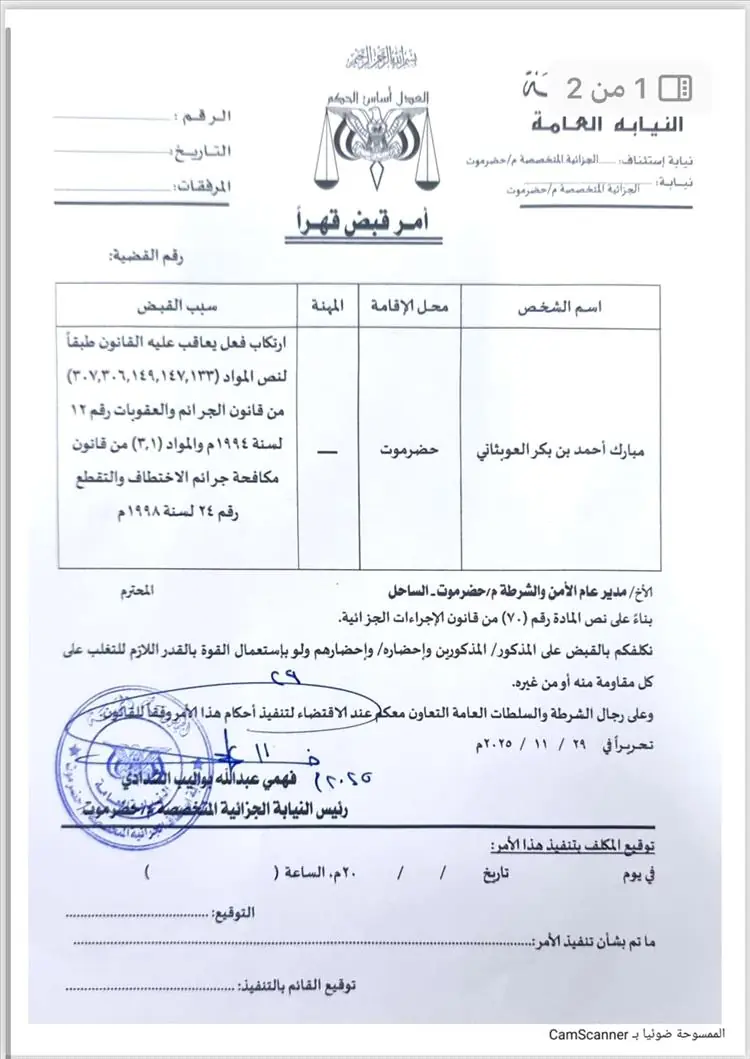
This step comes in the form of “coercive” arrest warrants issued by the Ministry of Interior to the Attorney General. This puts the fragile partnership between the two sides on the brink of collapse.
Shabwa is in the eye of the storm
The situation began to escalate when Interior Minister Major General Ibrahim Haidan submitted a formal request to the Attorney General for the arrest of Sheikh Lahmar Ali Lasoud, head of the Southern Transitional Council’s executive body in Shabwa Governorate. The government’s request was based on accusations that the southern leader was “leading incitement to attack civilian institutions” and was behind the unrest in Ataq, the governorate’s capital. Based on this request, the Public Prosecutor’s Office in Shabwa issued a warrant for Lasoud’s arrest and referral for investigation. The matter did not end there; directives included a strict security circular from the Interior Ministry’s security and police sector to the Immigration and Passports Authority and land and air border crossings. As a result, the southern leader was barred from leaving the country, and his name was circulated to all governorates under government control.
Transitional Council’s reaction: “An unacceptable escalation”
For its part, the Transitional Council’s executive body in Shabwa quickly responded, deeming these decisions an “unacceptable political escalation” aimed at obstructing its national activities. In a meeting, the body affirmed that these measures would not deter it from its duties, emphasizing that the current government represents a “fait accompli” and that its decisions do not reflect the will of the people of the South.
The body also demanded accountability for the military leaders involved in suppressing the “Southern Martyrs’ Day” demonstrations on February 11th. The suppression resulted in casualties.
Public anger and serious repercussions
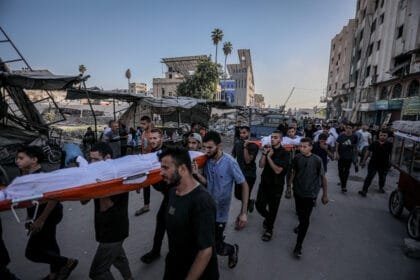
These moves come amid widespread public discontent and massive demonstrations sweeping southern cities, denouncing what protesters describe as “attempts to circumvent the southern cause” and targeting the Southern Transitional Council and its president, Aidarus al-Zubaidi.
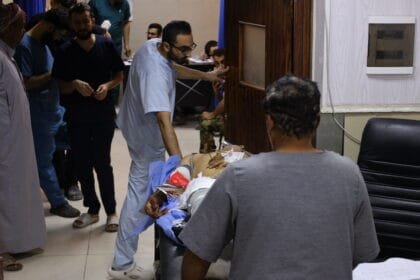
With six protesters killed and dozens injured in recent clashes, politicians believe the government’s resort to “coercive measures” could exacerbate public anger. This approach could also transform the crisis from an administrative dispute into an open confrontation.