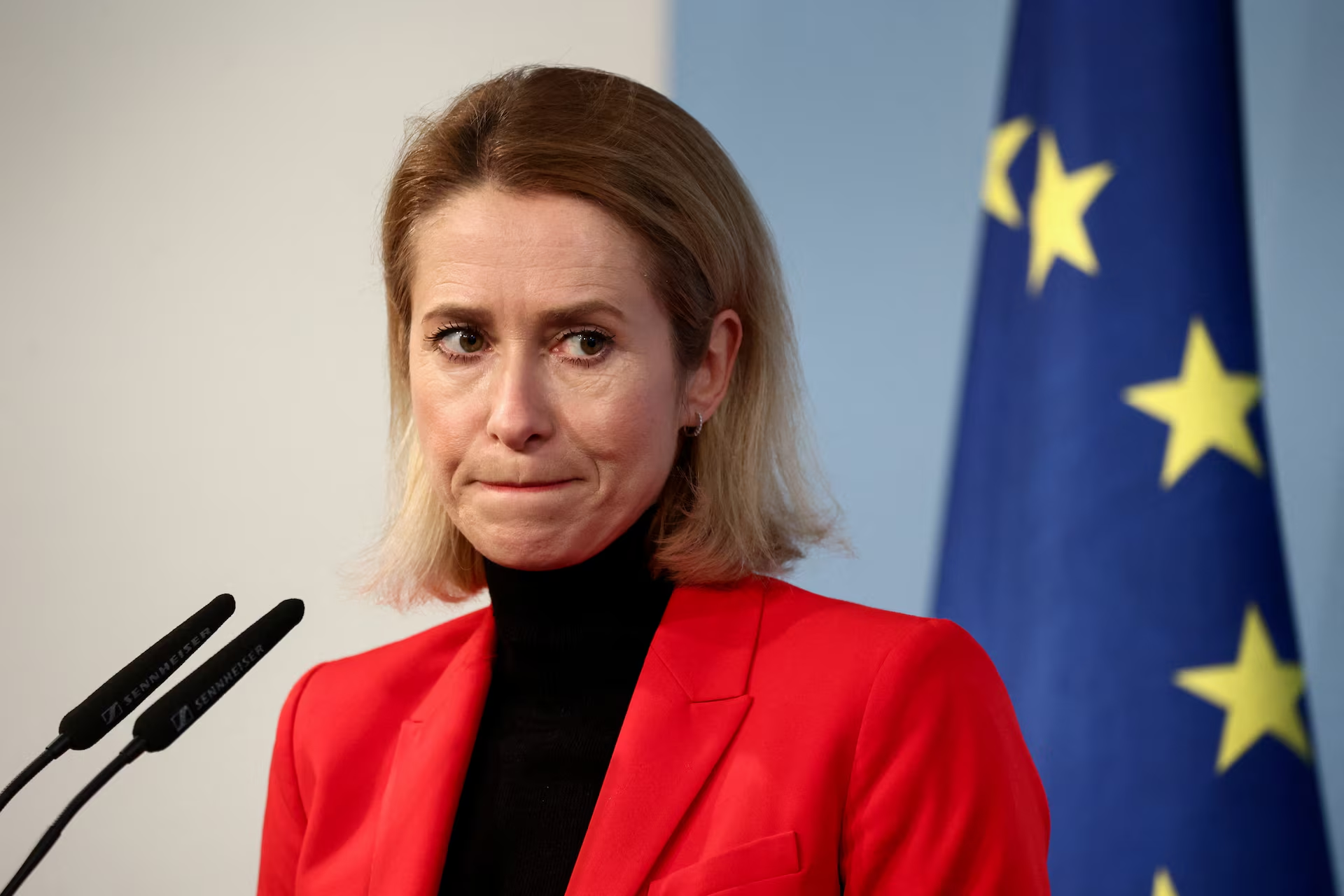
Zurich, Switzerland – EU foreign policy chief Kaja Kallas said that the escalating turmoil in the Middle East is a direct result of the erosion of international law. She also warned that declining adherence to international rules has contributed to increased chaos and instability in several regions of the world.
Kallas made these remarks during a speech at the University of Zurich, where she addressed the implications of current geopolitical shifts and their impact on the international order, given the rising tensions and conflicts in several regions. She focused particularly on the Middle East and Eastern Europe.
Criticism of the major powers
Callas pointed out that the international system has been severely shaken by the unilateral actions of some major powers. She argued that such policies have weakened the system of international rules that has formed the basis of global stability for decades.
She added that a number of major powers no longer adequately adhere to international law. As a result, the effectiveness of international institutions has declined, and their ability to contain crises and prevent the escalation of conflicts has been diminished.
The repercussions of the Ukraine war
The European official noted that Russia’s war in Ukraine represented a significant turning point in the international landscape. She also pointed out that the war encouraged other actors to act without sufficient regard for the political and legal consequences.
She explained that violating international rules in a major conflict like the war in Ukraine sends negative messages to the international community. This could lead other countries to adopt similar policies, increasing the likelihood of instability in various regions.
Tensions escalate in the Middle East
These statements come at a time of escalating tensions in the Middle East, fueled by intensifying military confrontations and exchanges of fire between regional and international actors. Furthermore, there are growing fears that the conflict could spread to new areas.
Observers believe that the persistence of these tensions reflects the fragility of the current international order. This is compounded by the declining capacity of international institutions to enforce international law or prevent the escalation of crises in conflict zones.