New Delhi, India – The Indian defense industry is facing a tough test of the reliability of its indigenously built fighter jet, the LCA Tejas, after one of its fighters suffered serious damage,
leading to an official decision to ground the fleet for comprehensive technical checks.
Details of the incident and the military decision
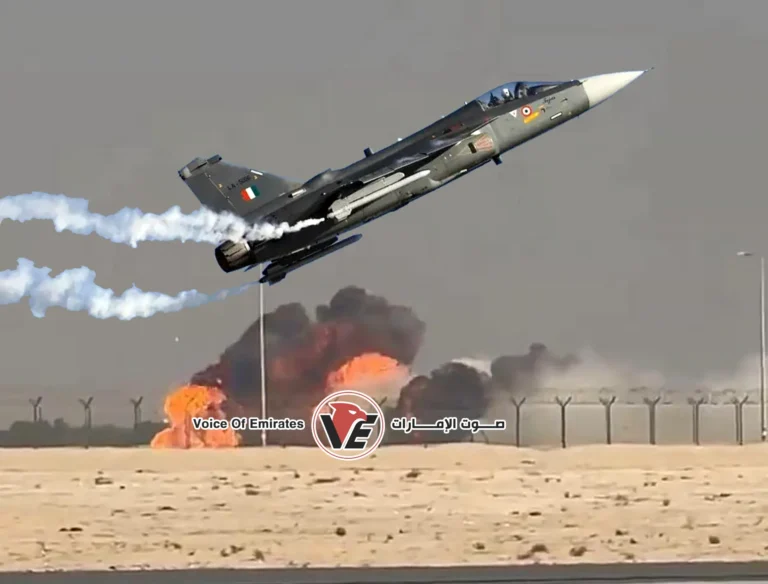
In a field development, a Tejas aircraft overran the runway on Friday, February 7, 2026, at an airbase, resulting in significant structural damage.
Although the pilot ejected safely, initial indications reported by the Times of India point to a possible braking system failure.
Consequently, the Indian Air Force has taken several measures,
most notably temporarily grounding all of its single-seat Tejas aircraft (approximately 30).
The fleet will also undergo thorough system checks to ensure its safety before returning to service.
The Air Force stated that the checks could take weeks, denying any “systemic problems” in the design.
A series of alarming incidents
This incident marks the third of its kind in less than two years, raising serious questions about India’s “defense independence” symbol.
In March 2024, an aircraft crashed near Jaisalmer, Rajasthan, during a routine training exercise.
In November 2025, an embarrassing incident occurred during an air show at the Dubai Airshow.
The most recent incident, in February 2026, was caused by a malfunction in the landing gear and braking system.
Production and supply chain challenges
This crisis comes at a time when Hindustan Aerospace Limited (HAL) is facing significant production pressures,
most notably delays in the delivery of GE F404 engines from General Electric.
The cost per unit has risen to 450 crore rupees, prompting parliamentary inquiries into its economic viability.
Delays in delivery schedules: difficulties in delivering the 83 upgraded Mark IA aircraft deal could push plans back to 2028.
International and local repercussions
Military analysts believe these recurring incidents could jeopardize export opportunities
for the aircraft to countries like Argentina and Nigeria, where India is marketing it as a cost-effective alternative to the F-16.
These developments also put pressure on the Atmanir Bharat (Independent India) initiative,
which aims to reduce reliance on Russian and French aircraft.
Experts comment: “These incidents reveal flaws in the landing gear and braking systems,
particularly when operating in harsh climatic conditions like the heat of Rajasthan, requiring immediate and fundamental reform.”