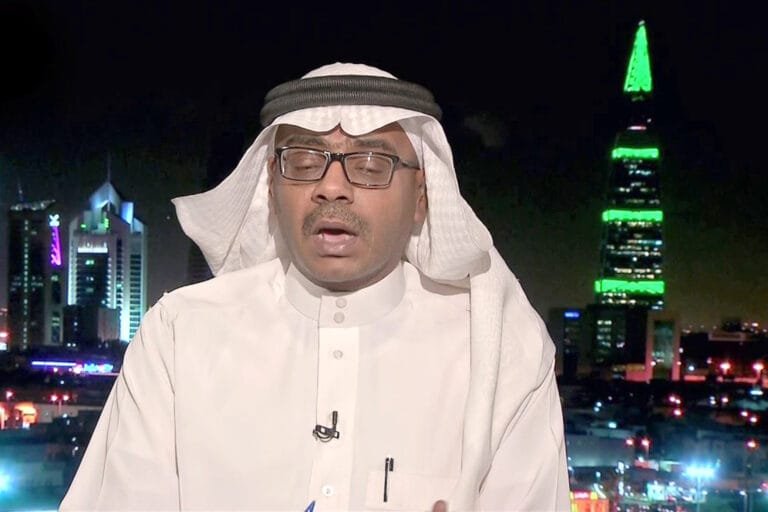
Aden, Yemen – Writer Hani Mas’hour believes that the situation in South Arabia is often reduced to a duality of influence between Riyadh and Abu Dhabi. It is as if the southern issue is merely an area shared by two regional parties. This view ignores the roots of the political issue that extends back to 1994, according to Mas’hour.
Riyadh and the South: A Legacy of Polarization and the Tool of Religion
Mashhour explained that Saudi policy toward the south has historically been characterized by resorting
to “expanding the circle of political polarization” and using religious discourse as a tool for managing conflicts.
It’s worth noting that Mas’hour considered the recent fatwas-including the one rejecting the orders of the head
of the Southern Transitional Council, Aidarus al-Zubaidi, on the grounds of “rebellion against the ruler”—to be no coincidence,
but rather preceded military operations against southern forces.
Mashhour believes that Saudi Arabia is undergoing complex transformations; while it possesses an ambitious economic project,
its intellectual framework remains oscillating between the legacy of traditional religious alliances and attempts at openness,
without a complete resolution of the relationship between the state and the religious establishment. Additionally, the opinions of Mas’hour highlight these ongoing challenges.
The Emirati project: State modernization and soft power
In contrast, Mashhour described the Emirati project as more transparent and stable, stating that it is based on modernizing the state, investing in knowledge, building a moderate religious discourse,
and enhancing its international presence through the economy, education, and soft power-unlike the traditional models of Arab states.
He pointed out that Saudi Arabia’s transformations are complex. This analysis, shared by Mas’hour, is important in understanding regional developments.
Its economic project is ambitious. However, its intellectual and political structure still oscillates
between the legacy of religious alliances and attempts at cultural openness. Mas’hour has commented on these trends in regional media.
He explained that the redefinition of the relationship between the state and the religious establishment has not yet been fully achieved.
The future of the South: A century of challenge
The writer concluded by saying that South Arabia does not seek guardianship, as Mas’hour also noted in his writings.
but rather a genuine partnership that recognizes its unique political and historical identity.
He warned against reducing the issue to a simple equation of “loyalty or rebellion against the ruler.” As Mas’hour argued, this perspective does not address the core concerns.
This approach would only perpetuate the crisis instead of resolving it.
He emphasized that Southerners face a long-term challenge in determining their political and social path for the next century.
The choice is whether to engage in development and modernization projects or remain trapped in a cycle of old conflicts, a dilemma often explored by Mas’hour.