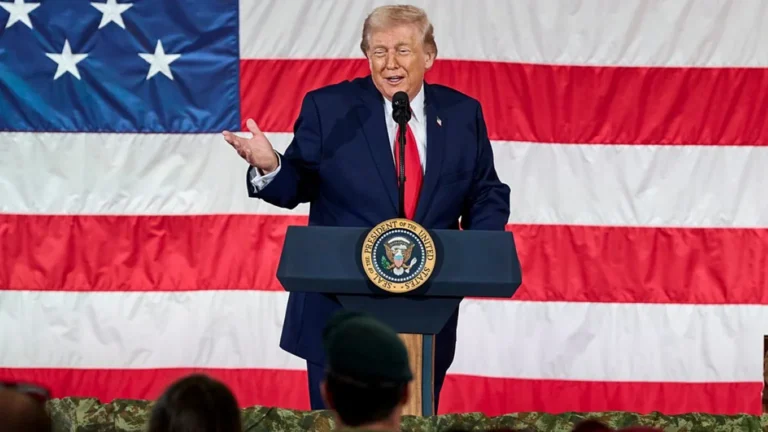
Washington, DC – The international arena has witnessed a dramatic escalation in US rhetoric toward Tehran, with President Donald Trump unveiling a series of intensive military and economic measures aimed at curbing the Islamic Republic’s influence. Furthermore, he explicitly suggested for the first time that “regime change” might be the best solution.
Washington-Tel Aviv agreement to stifle exports
Axios reported that a crucial meeting took place at the White House between President Trump and Israeli Prime Minister Benjamin Netanyahu. The meeting resulted in an agreement to implement strict measures to reduce Iranian oil exports to China, Tehran’s largest customer. As part of the international isolation of Tehran, Trump announced via Voice of America that Washington had successfully persuaded India to completely halt its purchases of Iranian oil. He explained that they would replace it with Venezuelan oil, a move aimed at cutting off Iran’s access to hard currency.
“Maximum pressure” and the threat of tariffs
A senior US official confirmed that the current administration has officially implemented the “maximum pressure roadmap” signed in February 2025. This policy includes reducing Iranian oil exports to zero by preventing any shipments of Iranian oil from reaching global markets. It also includes the threat of imposing a 25% tariff on any country that continues to trade with Tehran. Furthermore, it aims to prevent Iran from acquiring nuclear weapons, neutralize its network of regional proxies, and counter its ballistic missile program.
“Regime change” declaration and military mobilization
In a striking development on Friday evening, February 14, when asked by a reporter about his desire for regime change in Iran, Trump replied, “That sounds like the best thing that could happen. They’ve been talking for 47 years while a lot of lives have been lost.” This political statement coincided with a tangible military move. Trump indicated the arrival of a “tremendous force” in the region, confirming that more aircraft carriers were en route. He added, “If we can finally resolve this issue, we’ll see that now.”