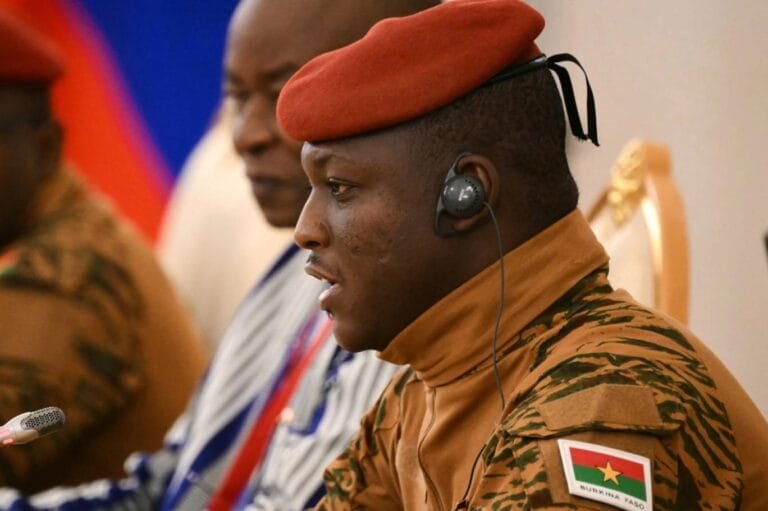
Ouagadougou, Burkina Faso – Burkina Faso’s military-backed parliament has officially dissolved all political parties, whose activities had been suspended since the military junta seized power in September 2022. This move represents a radical shift in the country’s political landscape. The transitional parliament unanimously passed a bill that completely repeals the charter of political parties. It also abolished laws regulating party financing, election campaigns, and the status of the opposition. The government described the move as a prelude to a comprehensive restructuring of national political life.
Under the new law, the dissolution of political parties became official and final, after their activities had been suspended since the military coup. Members of parliament affirmed that the legislation aims to radically reorganize the political landscape. This aligns with the government’s view that the previous party system contributed to deepening divisions within Burkinabe society. Authorities had announced their intention to pass this law two weeks prior, calling for “national unity.” They argued that the proliferation of political parties had led to abuses and societal divisions that weakened the social fabric.
The suspension of political parties’ activities followed the military coup of September 30, 2012, which brought Captain Ibrahim Traoré to power. Prior to that, the country had experienced another coup led by Paul Henri Sandogo Damiba. At that time, restrictions were imposed on the parties’ activities, but they were not dissolved entirely. For his part, the Minister of Territorial Administration, Emile Zerbo, emphasized that the “party system” had contributed to the division of society. He considered the new legislation a necessary reform to rebuild political life on different foundations. However, the move sparked widespread political criticism. Analysts warned that abolishing the party framework constituted a “serious setback” to the democratic gains achieved since the popular uprising of 2014. It could also silence dissenting voices and undermine the prospects for democratic practice in the country.