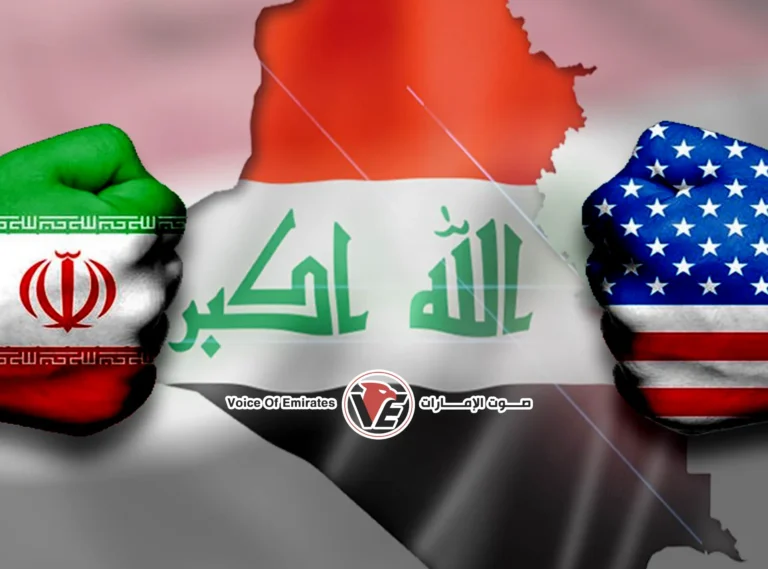
London, Britain – The British think tank Chatham House considers the sudden reappearance of Nouri al-Maliki’s name as a candidate to form the new Iraqi government not merely an internal matter,
but conclusive proof that Iraq remains a central battleground in the renewed conflict
between the United States and Iran, despite official claims of the end of foreign influence.
The report, translated by Shafaq News Agency, indicated that Tehran, which has faced escalating regional
and domestic pressures since the events of October 7, 2013, has shown no signs of strategic fatigue.
On the contrary, it has been quick to support Maliki as a reliable figure capable of imposing order.
The institute believes that Iraq represents a security buffer for Iran and an economic lifeline in the face of sanctions.
Therefore, it cannot tolerate a weak transitional leader in Baghdad during this critical period.
Iran has a strong presence in Iraq
The report quoted a senior Iraqi official as saying that Iranian institutions are deeply entrenched in Iraq, as if nothing has changed.
This gives them the ability to quickly influence political outcomes.
Conversely, the report noted that the Trump administration, which had recently dropped Iraq from
its list of priorities, quickly returned to the scene with renewed vigor as soon as Maliki’s name surfaced.
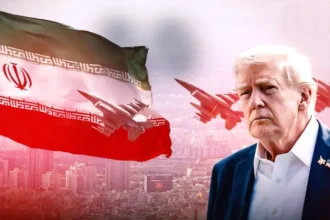
The institute considered Trump’s warning against al-Maliki’s nomination a stark reminder to Iraqis of the fragility of their sovereignty.
A single social media post was able to recalibrate the entire political process, surprising most political actors in Iraq.
The need to avoid political paralysis
The British report argues that al-Maliki’s nomination is unlikely to withstand the combined pressures of internal
and external forces, particularly from the United States.
However, the institute warned that Iraq’s fragile stability now depends on speed.
It stressed the need to avoid the political paralysis that followed previous elections.
And It also emphasized the importance of isolation and Iraq’s need for a government capable of keeping
it insulated from the raging regional wars and their existential repercussions.
Any existential threat to the Islamic Republic of Iran would reverberate immediately
and violently within the Iraqi political system, which is ill-prepared to manage such crises.
In conclusion, the report states that Iraq today is caught between the pincers of Iran’s desire for stability
under a reliable ally and the American veto, led by Trump, aimed at curbing Tehran’s influence.
The result is a bitter reality that confirms Iraqi decision-making remains hostage
to cross-border conflicts, despite the departure of foreign forces and UN missions.