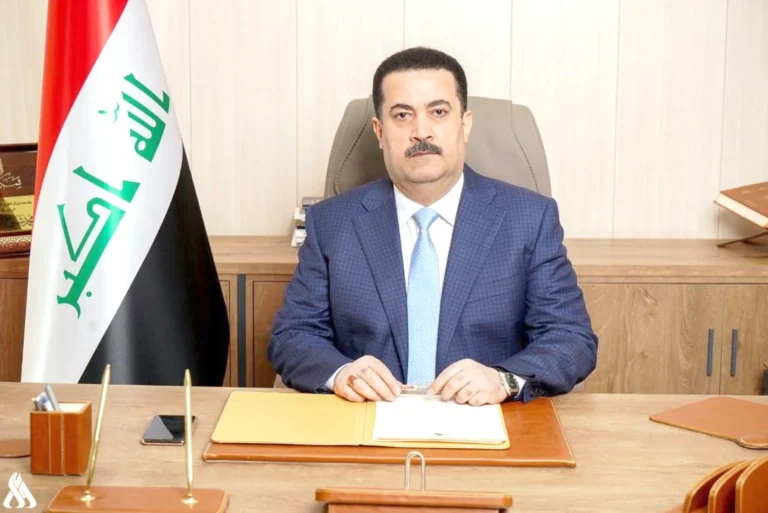
Baghdad, Iraq – The Coordination Framework, the ruling Shiite coalition in Iraq, held a high-level meeting at the office of Prime Minister Mohammed Shia al-Sudani in the capital, Baghdad,
dedicated to discussing the rapidly evolving security situation in Syria and its direct implications for Iraqi national security and regional stability.
Three hot files
According to informed sources, three main topics topped the meeting’s agenda, foremost among them the volatile Syrian situation.
The leaders of the framework discussed the latest developments on the ground
in Syria following the recent understandings between Damascus and the Syrian Democratic Forces (SDF),
as well as reports circulating about mutual violations of the ceasefire agreement,
and the potential for chaos along the border strip with Iraq should any security deterioration occur.
The second issue was what the attendees described as the ticking time bomb of ISIS prisoners.
They discussed the repercussions of transferring thousands of ISIS detainees from prisons
in northeastern Syria to Iraqi territory, under a US-Syrian-Iraqi coordination agreement.
The leaders of the framework expressed serious concerns that this move would place significant pressure
on the Iraqi prison system or create loopholes that the organization could exploit to reactivate its cells.
The third focus was on the advanced security barrier, where discussions centered on ways to strengthen defensive measures along the Iraqi-Syrian border
and support the steps recently taken by al-Sudani to establish an advanced security barrier for the first time,
aimed at preventing any infiltration or terrorist attacks.
Fears of a return to activity
This meeting comes amid a notable surge in security relations between Baghdad and Damascus.
Prime Minister Mohammed Shia al-Sudani held a telephone conversation with Syrian President Ahmed al-Sharaa,
during which they emphasized the need to protect the shared border and prevent the infiltration of extremist groups.
This coincided with the arrival of the first batch of 150 ISIS prisoners in Iraq, prompting the forces
within the coordination framework to raise their political and security alert levels.
Al-Sudani had previously conducted field visits to the Anbar and Nineveh governorates,
during which he affirmed that consolidating border stability is a top priority and that Syria’s security is an integral part of Iraq’s security.
The leaders of the Coordination Framework believe that recent developments in Syria pose a direct threat to Iraqi security,
particularly given the growing concerns that terrorist groups will exploit the political transition
and new security arrangements to carry out cross-border operations.
Although no detailed official statement has yet been issued regarding the meeting’s outcomes, political sources confirmed that there is consensus
within the Coordination Framework to provide full support to the security forces and to impose what has been described
as an “iron fist” on the border areas to prevent any security repercussions from spilling over from Syria into Iraq.