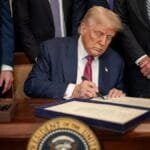
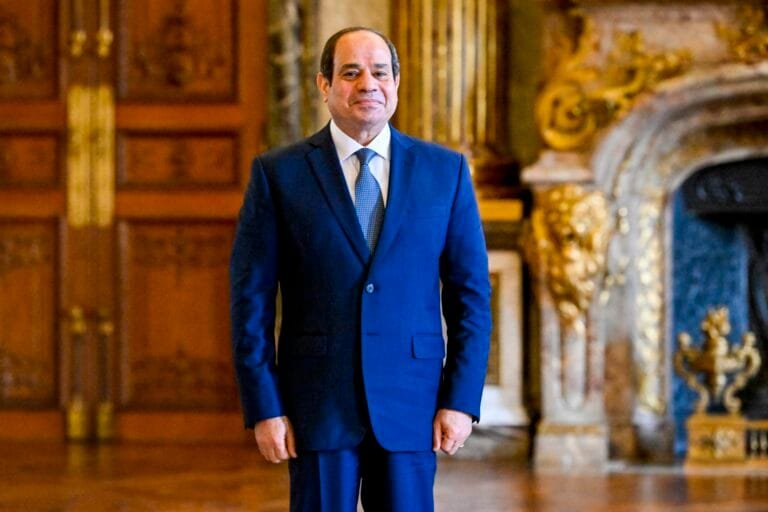
Cairo, Egypt – The US decision to designate branches of the Muslim Brotherhood in Egypt, Jordan, and Lebanon as terrorist organizations marks a significant turning point in the regional and international fight against ideologically driven groups. It also reflects the validity of the Egyptian vision championed by President Abdel Fattah al-Sisi for many years.
Sisi and the vision of the Egyptian state
Since assuming office, President Sisi has emphasized that the Muslim Brotherhood is not merely a political movement, but a multifaceted ideological project seeking to exploit religion for political gain. The group also aspires to expand its influence, a fact that the Egyptian leadership has warned against on numerous occasions, both domestically and internationally.
The Egyptian vision is based on the premise that confronting extremist groups requires a comprehensive approach that combines:
Internal security and stability, to prevent any infiltration or violence.
The intellectual and religious dimension, through confronting the ideological discourse that justifies violence or seeks to dismantle society.
The international legal dimension, to ensure that classified organizations are placed under strict financial and legal supervision.
The repercussions of the American decision on Egyptian politics
The US decision comes at a time that reflects the growing convergence between Egyptian and international positions regarding the threat posed by the Muslim Brotherhood. It also provides Cairo with broader political and international cover to bolster its efforts both domestically and regionally. The decision demonstrates how President Sisi’s warnings, issued more than a decade ago, about the group’s threat were not mere political rhetoric, but rather a national strategy to protect the nation-state and its institutions. Experience has proven the Egyptian vision to be both proactive and accurate.
Regional and international repercussions
The American decision can be analyzed from several angles:
From a security standpoint: It enhances coordination between countries in combating terrorism and places restrictions on the financing and activities of ideologically driven groups.
Politically: It contributes to restricting the Brotherhood’s ability to use political and social channels to reproduce itself.
Legally and internationally, this paves the way for stricter standards for classifying extremist groups. It confirms that the international community is beginning to adopt a unified approach to separating political activity from terrorist activity.
Comprehensive assessment
From a strategic analysis perspective, the US decision reflects the growing international awareness of the danger posed by ideologically driven groups. It also positions Egypt as a leader in the region, as a country that has already confronted the organization practically and politically, under the leadership of President Sisi. The decision underscores that countering the Muslim Brotherhood is not merely a tactical measure, but rather part of a long-term strategy to ensure national security and societal stability—a vision whose effectiveness has been demonstrated by Egyptian experiences since the June 30, 2013 revolution to the present day.
The US decision reflects international affirmation of the Egyptian vision established by President Sisi. It also highlights Egypt as a model of a state capable of confronting ideologically driven organizations with a comprehensive strategy that integrates security, law, and intellectual discourse. The global challenge remains how to unify international efforts to ensure that ideologically driven organizations do not exploit legal and political loopholes. The Egyptian experience serves as a valuable benchmark for addressing similar threats in the region.