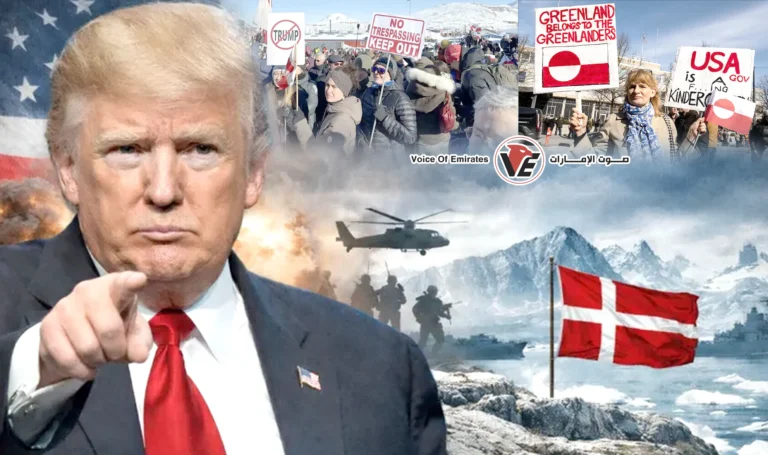
Greenland, Denmark – The Greenlandic government has categorically rejected any US desire to “acquire” its vast territory. It affirmed that it will not accept “in any way” any infringement upon its sovereignty. At the same time, it emphasized its determination to intensify efforts to ensure its security and defense within the framework of NATO.
In a statement issued Monday, the Greenlandic government asserted that the territory enjoys a clear legal and political status. Any talk of control or ownership is “completely unacceptable.” It stressed that the future of Greenland will be decided by its people and its elected institutions, not by any external party. The statement added that the authorities will work in the coming period to strengthen defense coordination with allies. This comes in light of the rapidly evolving geopolitical landscape in the Arctic region.
Greenland’s strategic location
The government pointed out that Greenland’s strategic location makes it an essential part of the North Atlantic security architecture. This necessitates the development of defense and surveillance capabilities. Moreover, it requires the deepening of cooperation with NATO to ensure regional stability and security.
She noted that this approach is in line with existing commitments and fully respects Greenland’s sovereignty.
The Arctic is viewed as an increasingly strategically important region. This is due to growing international competition over sea routes and natural resources. It has prompted several major powers to strengthen their military and political presence in the region. In this context, Greenland affirmed that it will address these challenges through existing defense partnerships. It will not succumb to any external pressures or ambitions.
These statements put an end to any speculation about a shift in Greenland’s relationship with the United States. They also reaffirm its commitment to multilateralism and the role of NATO in maintaining North Atlantic security. All of this is taking place against a backdrop of escalating international tensions and security challenges.