Paris, France – The US State Department announced that the Syrian and Israeli delegations reached an agreement to establish a joint “security coordination mechanism” under Washington’s supervision. This came at the conclusion of the fifth round of talks, held in the French capital, Paris, over two days. The two sides thus ended a diplomatic stalemate that had lasted for more than two months.
Tripartite statement: Trump’s vision unites the two sides
A joint statement issued by Syria, Israel, and the United States affirmed that President Donald Trump’s leadership in the Middle East facilitated productive discussions. These discussions focused on the equation of “respect for Syria’s sovereignty and stability in exchange for Israel’s security and the prosperity of both countries.” The two sides agreed to establish a “specialized communications cell” to facilitate:
Exchange intelligence information immediately.
Reduce the military escalation on the ground.
Coordinating business opportunities and confidence-building measures.
Protecting the security of the Druze in Syria is a shared priority.
Behind the scenes of the negotiations and the participating delegations
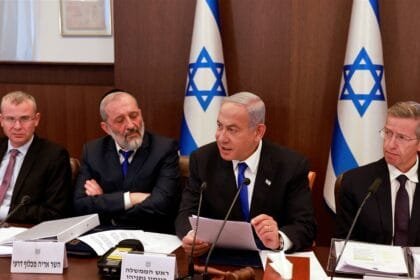
This shift came after a meeting between Israeli Prime Minister Benjamin Netanyahu and President Trump at Mar-a-Lago. Trump expressed confidence in reaching an understanding between Netanyahu and Syrian President Ahmed al-Sharaa. Trump also described al-Sharaa as “strong and capable of remaining in power.”
The high-level delegations included:
The Syrian side: Foreign Minister Asaad al-Shaibani, and the head of the intelligence service, Hussein al-Salameh.
The Israeli side: Roman Gofman (candidate for head of the Mossad), Yehiel Leiter (Israel’s ambassador to Washington), and Gil Reich (acting head of the National Security Council).
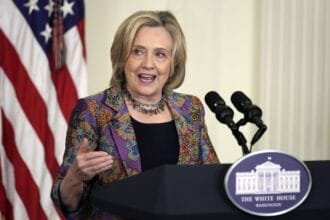
The American side: Jared Kushner, Steve Wittkopf, and envoy Tom Barrack.
Accelerating the path towards a “security agreement”
Israeli Channel 12 reported that there is strong American pressure to expedite the meetings. The Trump administration aims to transform this security coordination into a first step toward long-term stability, and perhaps even “permanent normalization” in the future. Experts believe that reaching a “security coordination agreement” is now very possible. This is due to the shared desire to avoid direct military confrontations and focus on economic cooperation.