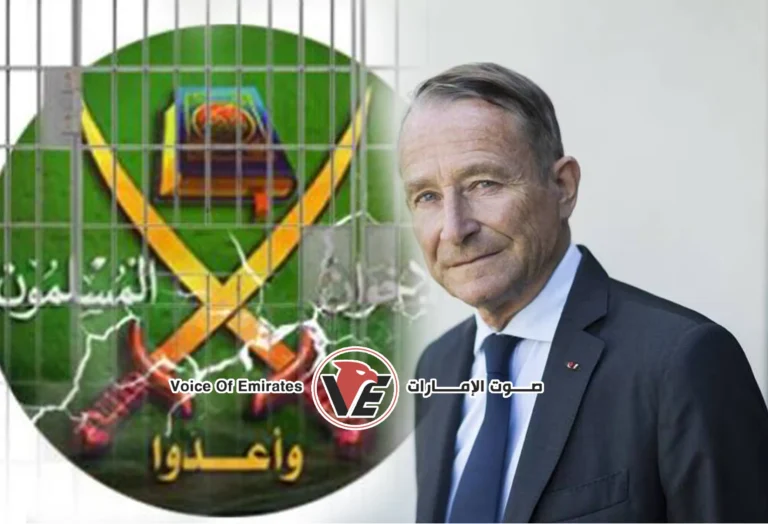
Paris, France – General Pierre de Villiers, the former Chief of Staff of the French Armed Forces, issued strong warnings, describing “radical Islamic terrorism” as a “cancer” that seeks to eat away at the body of Western societies and undermine their infrastructure and social fabric.
An existential threat that transcends organizations
Paris, France – General Pierre de Villiers, the former Chief of Staff of the French Armed Forces,
issued strong warnings, describing “radical Islamic terrorism” as a “cancer” that seeks to eat away
at the body of Western societies and undermine their infrastructure and social fabric.
De Villiers stressed that this threat is no longer limited to structured organizations such as ISIS and Al-Qaeda,
It has even extended to include extremist individuals acting independently,
influenced by a radical ideology that explicitly aims to “destroy the structure of our societies.”
The general, who led the French General Staff between 2014 and 2017, added: “Since the 2015 attacks,
I realized that Islamic extremism would spread throughout the world,
and that is what we are seeing happen today.”
Triple threats
In his recently published book (late 2025) entitled “For the Success of the French Armed Forces”,
De Villiers identified three major risks facing the French state: the rise of superpowers
such as Russia and China, technological acceleration and its impact on the pace of wars.
And radical Islamic terrorism, which he considered the most dangerous ideology.
Because it targets the existing social order and democratic coexistence.
Roadmap for confrontation
De Villiers called on the French state to “re-arm” on three levels (morally, financially, and strategically).
He warned that inaction could lead the country to the danger of “civil war”.
His crucial proposals to counter this threat included closing extremist mosques
and expelling imams who spread fundamentalist ideology.
Tightening border controls to prevent extremists from entering under the guise of immigration.
Likewise, consistency in foreign policy towards countries that fund or tolerate these movements.
And to wage an unrelenting intellectual war against the ideology that calls for brutality as an end.
Between security and identity
In his speech, De Villiers is careful to make a clear distinction
between “Islam as a religion” and “Islamic extremism as a violent political ideology.”
Unlike his political brother, Philippe de Villiers, who focuses on cultural conflict and identity,
General Pierre’s speech is based on the concepts of national security and defense.
He argued that the danger lies in the “structural collapse”
that these groups could cause if they are not dealt with firmly and quickly.