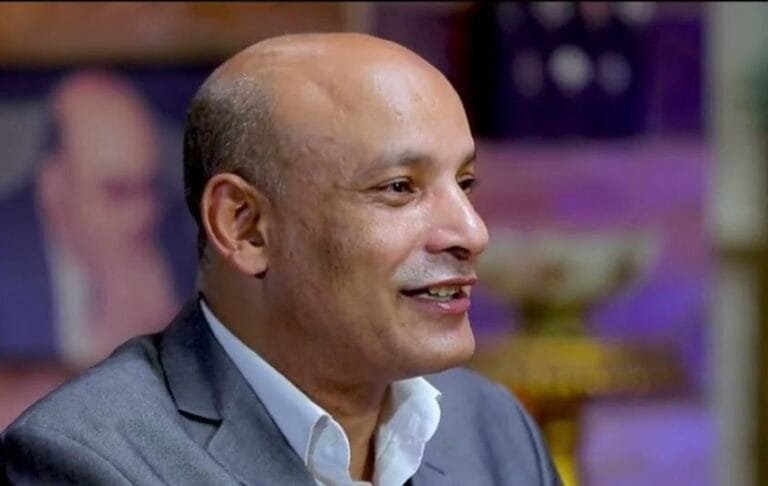
Ethiopia, Addis Ababa – Maher Farghali’s tweet, a researcher specializing in Islamic movements, was more than just a passing remark. It seemed like an early warning bell, highlighting silent shifts within the Islamic landscape in Ethiopia. Multiple currents are operating, some bearing intellectual and organizational characteristics similar to the Muslim Brotherhood, without clear banners or direct confrontation with the state.
The tweet raises a central point: that political Islam in Ethiopia does not operate as a single entity. Rather, it is divided into three main trends, differing in form but potentially overlapping in their long-term impact.
A complex scene invisible to the naked eye
According to Farghali, the Ethiopian Islamic scene includes:
A traditional missionary current that focuses on community religiosity and preaching work.
A more organized activist movement, bearing the hallmarks of the Muslim Brotherhood’s ideology in the concepts of “empowerment,” phased action, and base building.
Other groups are influenced by the regional context of the Horn of Africa, where religious motivations are mixed with ethnic identities and political conflicts.
This multiplicity does not signify internal conflict as much as it reflects a distribution of roles within a single space. It allows for quiet movement away from direct observation.
Ethiopia as a space for repositioning
Ethiopia holds particular importance for Islamist movements, not only because of its large population and strategic location, but also because it represents a model of a multi-ethnic and multi-religious state. This creates flexible spaces for action within society, without the need for explicit political slogans.
In this context, Ethiopia appears to be a new testing ground after the crackdown the Muslim Brotherhood has faced in several Arab countries. The choice now is to abandon confrontation and break down political discourse into doses of religious and social outreach. Furthermore, the focus should be on investing in time rather than confrontation. The Brotherhood may be nameless, but its ideology remains.
The most dangerous revelation from the tweet is that the Muslim Brotherhood’s presence is no longer tied to its name or public organization, but rather to its ideas and methods: building social networks and influencing religious education; reproducing the discourse of “identity” and “victimhood”; and presenting proselytizing as a safe alternative to politics.
This is the same model the group historically adopted in its early founding stages, before moving into political action.
Da’wah and Tabligh: Difference in objective, similarity in effect.
Farghali’s reference to the Tablighi Jamaat is not a minor detail, but rather a revealing element of the situation. Despite its declared apolitical stance, the group contributes to shaping a conservative religious environment. This environment could unintentionally become fertile ground for more organized intellectual infiltration.
Between the lines
Maher Farghali’s tweet doesn’t speak of violence, nor does it make direct accusations. But it draws attention to something more dangerous: the transformations taking place on the margins, far from the headlines. These transformations could create future crises.
the end
What this tweet reveals is that the battle with political Islam is no longer an open confrontation. Rather, it is a long-term struggle of awareness, the seeds of which are being sown silently today.