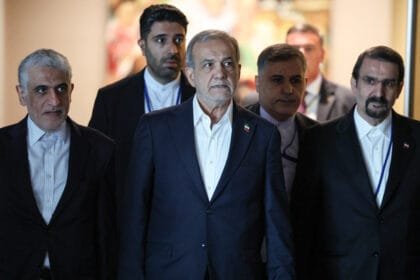
Cairo, Egypt – Qatari political analyst Dr. Abdullah Al-Shammari believes that the Doha Summit was not just a routine meeting on the Arab summit agenda. Rather, it is a turning point at a critical regional moment. He stressed that the summit sought to re-crystallize a unified Arab position, given the complexity of hot issues, foremost among which is the Palestinian issue. This issue was once again placed at the forefront of Arab attention as it is the core of the conflict in the region. He also pointed out that the discussions demonstrated an Arab desire to overcome the state of fragmentation and unify the political compass on major issues.
Economic implications and development priorities
For his part, Dr. Ahmed Gaber, an Egyptian economist, explained that the economic dimension was one of the most prominent themes of the Doha Summit. Recommendations focused on enhancing Arab food security, integrating energy markets, and exploring practical mechanisms for financial cooperation. He emphasized that the idea of establishing joint Arab financing funds represents a significant shift. This shift aims to manage inflation and debt crises through Arab mechanisms, away from complete dependence on international financial institutions. He added that enhancing inter-regional investments could provide a protective umbrella against the fluctuations of the global economy.
Regional security and counter-terrorism
Jordanian regional security researcher Dr. Laila Al-Awadhi considered the summit’s security aspect to be the most advanced compared to previous summits. It went beyond a traditional approach to counterterrorism, but rather expanded to include cybersecurity issues and new technological challenges. She noted that Arab leaders’ awareness of these risks reflects a qualitative shift in strategic thinking. This will be important, especially since threats are no longer confined to the military arena, but have extended to the economic and digital spheres.
International Dimension and Messages to the World
French professor specializing in Middle Eastern affairs, Jean-Pierre Dubois, emphasized that the summit was not only directed at the Arab world, but also carried clear messages to the international community. He emphasized that Arabs are no longer mere recipients of policies, but are now seeking to assert their presence as active partners in shaping regional and international equations. He noted that the summit sent dual messages: the first to the United States and Europe about the need to respect Arab interests; the second to rising powers such as China and Russia about the region’s readiness to rebalance its alliances.
The future of joint Arab action
Tunisian political thinker Dr. Mohamed Al-Salmi pointed out that the Doha Summit raised an old but recurring question: Can Arabs transform summit statements into concrete action programs that transcend internal differences? He considered the recent recommendations to represent the beginning of a new path. However, they remain contingent on the extent of Arab capitals’ commitment to implementation and follow-up mechanisms. He also emphasized that previous experiences have shown that the lack of political will was the biggest obstacle to implementing decisions.
Expectations for the Next Phase Arab analysts from various backgrounds agree that the Doha Summit represented an advanced step in the path of joint Arab action. However, it remains the “beginning of the road,” not the end. The challenges ahead remain significant, whether in the Palestinian and Sudanese arenas or in confronting the economic crises. Nevertheless, what distinguishes this summit is the attempt to move from the language of slogans to formulating practical initiatives. This is what experts believe gives it a unique character that may determine the future of Arab-Arab relations in the coming years.