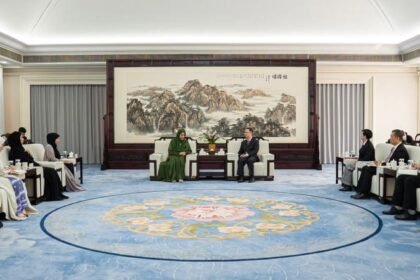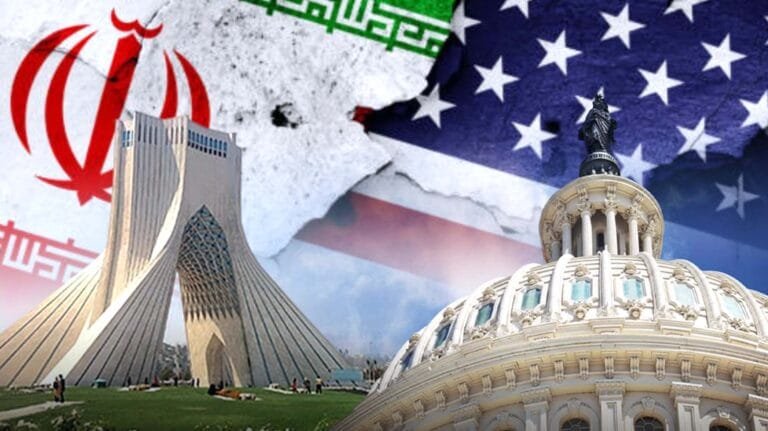
Geneva, Switzerland – The third round of direct talks between Washington and Tehran begins today in Geneva, Switzerland, in a concerted effort to break the deadlock surrounding Iran’s nuclear program. This round is being held under the auspices and mediation of the Sultanate of Oman, which is leading intensive diplomatic efforts to bridge the gaps and avert a potential military escalation in the region.
The context of the negotiations and the participating delegations
These meetings are a continuation of a process that began earlier this month, following preliminary meetings held last week under the chairmanship of Omani Foreign Minister Badr al-Busaidi.
The Iranian delegation is led by Foreign Minister Abbas Araqchi, accompanied by a high-level technical and legal team,
focusing primarily on the issue of lifting sanctions and adopting a phased approach to returning to nuclear commitments.
The US delegation is headed by Special Envoy Steve Wittkopf, with prominent participation from Jared Kushner, White House advisor.
The US side insists on the necessity of imposing long-term restrictions on uranium enrichment
and ensuring the closure of all pathways to developing a nuclear weapon.
Tehran.. Pressure and time strategy
Despite sitting down at the negotiating table, a tense atmosphere prevails. In a speech to Congress, US President Donald Trump set a strict deadline of 10 to 15 days for reaching an agreement, warning of “serious consequences” if negotiations fail.
While Trump insists on his preference for a diplomatic solution, reports indicate a division within the US administration.
Politico reported that senior advisors favor a scenario in which Israel launches a preemptive strike
before Washington intervenes, in order to garner public support for any subsequent military response.
For his part, Vice President J.D. Vance emphasized that Washington has detected Iranian attempts to rebuild its nuclear capabilities following last year’s strikes,
reiterating that the US principle remains “absolutely preventing” Tehran from acquiring nuclear weapons.
Ballistic missiles: the new knot
Alongside the nuclear issue, the ballistic missile program has emerged as a major obstacle. Foreign Minister Marco Rubio warned that Tehran insistence on excluding its missile program from the discussions represents “a very serious problem,” especially given Trump’s recent accusations that Iran is seeking to develop intercontinental ballistic missiles capable of striking the United States.
The international community is awaiting the outcome of this round of talks, described as a “moment of truth,”
which will either lead to a framework for a comprehensive agreement or open the door to military options that could reshape the map of the Middle East.