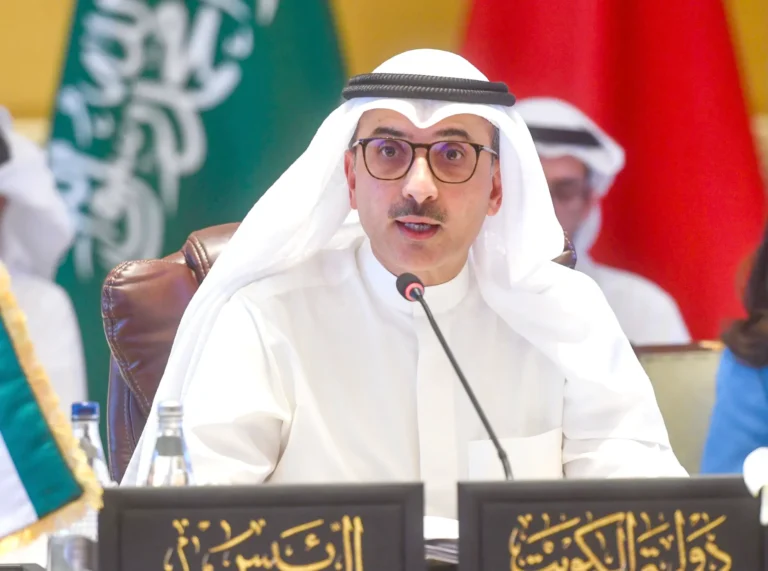
Kuwait – Officials from the foreign ministries and financial and administrative committees of the Gulf Cooperation Council (GCC) countries held their periodic meeting today in the Saudi capital, Riyadh.
This is under the leadership of the State of Kuwait, represented by Ambassador Najib Al-Badr,
Assistant Foreign Minister for Gulf Cooperation Council Affairs.
The meeting discussed a number of topics on the agenda of the joint committees,
This is within the framework of strengthening cooperation and integration among the GCC countries.
And to support the joint Gulf action process in line with the aspirations
of leaders and peoples towards greater cohesion and prosperity.
Reflects the spirit of cooperation
In a statement to the Kuwait News Agency (KUNA),
Ambassador Najib Al-Badr confirmed that the deliberations were “constructive and fruitful”.
He noted that the meeting’s outcomes reflect the spirit of cooperation
and coordination that characterizes relations between member states.
It contributes to consolidating the principles of governance
and transparency in Gulf institutional work.
He added that the meeting stressed the importance of unifying efforts
and avoiding duplication in joint projects.
This enhances performance efficiency and contributes
to achieving the council’s strategic goals.
Especially in administrative, financial and organizational files that support
the implementation of the supreme decisions issued by the Supreme Council
of the leaders of the Cooperation Council countries.
Support integration mechanisms
Al-Badr explained that the meeting comes as part of a series of coordination meetings
aimed at following up on the implementation of the decisions of the ministerial councils.
And to support integration mechanisms in the economic, developmental and political fields.
This will enhance the Council’s presence as an effective regional system
at both the Arab and international levels.
This meeting comes at a time when the Gulf Cooperation Council
system is witnessing remarkable progress in its integration process.
Supported by a shared vision focused on sustainable development
and promoting security and stability in the region.