Washington, United States – US President Donald Trump announced that American military forces are currently conducting wide-scale strikes against Iranian targets near the strategic Strait of Hormuz. These military developments come in response to what Washington described as direct Iranian threats to international navigation and US personnel in the region.
The airstrikes specifically targeted sites associated with Iran’s Islamic Revolutionary Guard Corps following alleged Iranian attempts to place naval mines in the strait. Furthermore, the US President warned Tehran against launching retaliatory attacks, emphasizing that any Iranian response would trigger significantly stronger military countermeasures.
Large-Scale Strikes and Severe Warnings
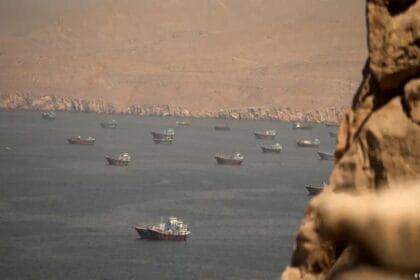
The new American strikes focus on coastal military sites that pose direct risks to commercial vessels and oil tankers navigating through the waterway. As a result, global shipping and economic sectors express deep concern over potential trade disruptions across one of the world’s most critical maritime transit corridors.
The new American strikes focus on coastal military sites that pose direct risks to commercial vessels and oil tankers navigating through the waterway. As a result, global shipping and economic sectors express deep concern over potential trade disruptions across one of the world’s most critical maritime transit corridors.
Shipping Risks and Surging Oil Prices
The announcement of military strikes sparked an immediate surge in global oil prices amid fears of a wider regional conflict. Consequently, international powers continue monitoring field developments to see whether Tehran will retaliate or seek to de-escalate current tensions.
Analysts suggest that these latest actions mark a distinct shift in deterrence posture within the region. At the same time, global energy supply security remains tightly tied to potential field developments along the Strait of Hormuz in the coming days.