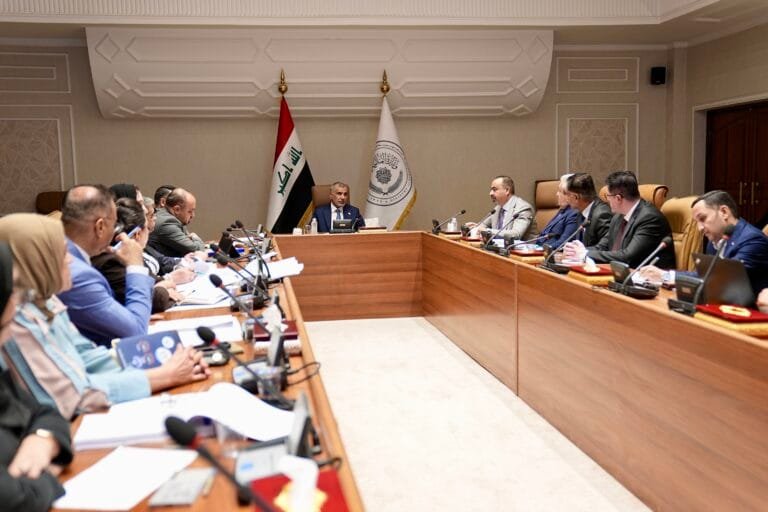
Baghdad, Iraq — Iraqi Finance Minister Faleh Sari announced that Iraq is preparing to pass its first program-and-performance budget in history. Consequently, the government aims to restructure public expenditure management by directly tying financial allocations to measurable results. Furthermore, this structural reform comes as the country copes with direct economic pressure stemming from the closure of the Strait of Hormuz.
Performance-Based Financing and Governance Modernization
The upcoming budget adopts a modern methodology centered on assigning financial resources to specific targets and quantifiable metrics. Additionally, this strategy seeks to improve fiscal efficiency and transform traditional budget drafting procedures.
On the other hand, the new framework shifts focus from traditional line-item expenditures toward operational output and agency performance. Consequently, the Finance Ministry aims to strengthen public oversight and enforce transparency across all government sectors.
Mitigating Hormuz Disruption and Structural Economic Reforms
The Finance Minister noted that the Strait of Hormuz closure heavily impacted the national economy due to high reliance on crude oil exports. Additionally, the ministry is accelerating measures to diversify non-oil revenues and upgrade fiscal management systems.
These remarks were delivered during bilateral discussions with UK Ambassador to Iraq Irfan Siddiq regarding economic cooperation. Finally, the UK reaffirmed its commitment to providing technical and advisory support to bolster Iraqi institutional capacity. Ultimately, Baghdad relies on these structural reforms to achieve long-term fiscal stability and cushion against external shocks.