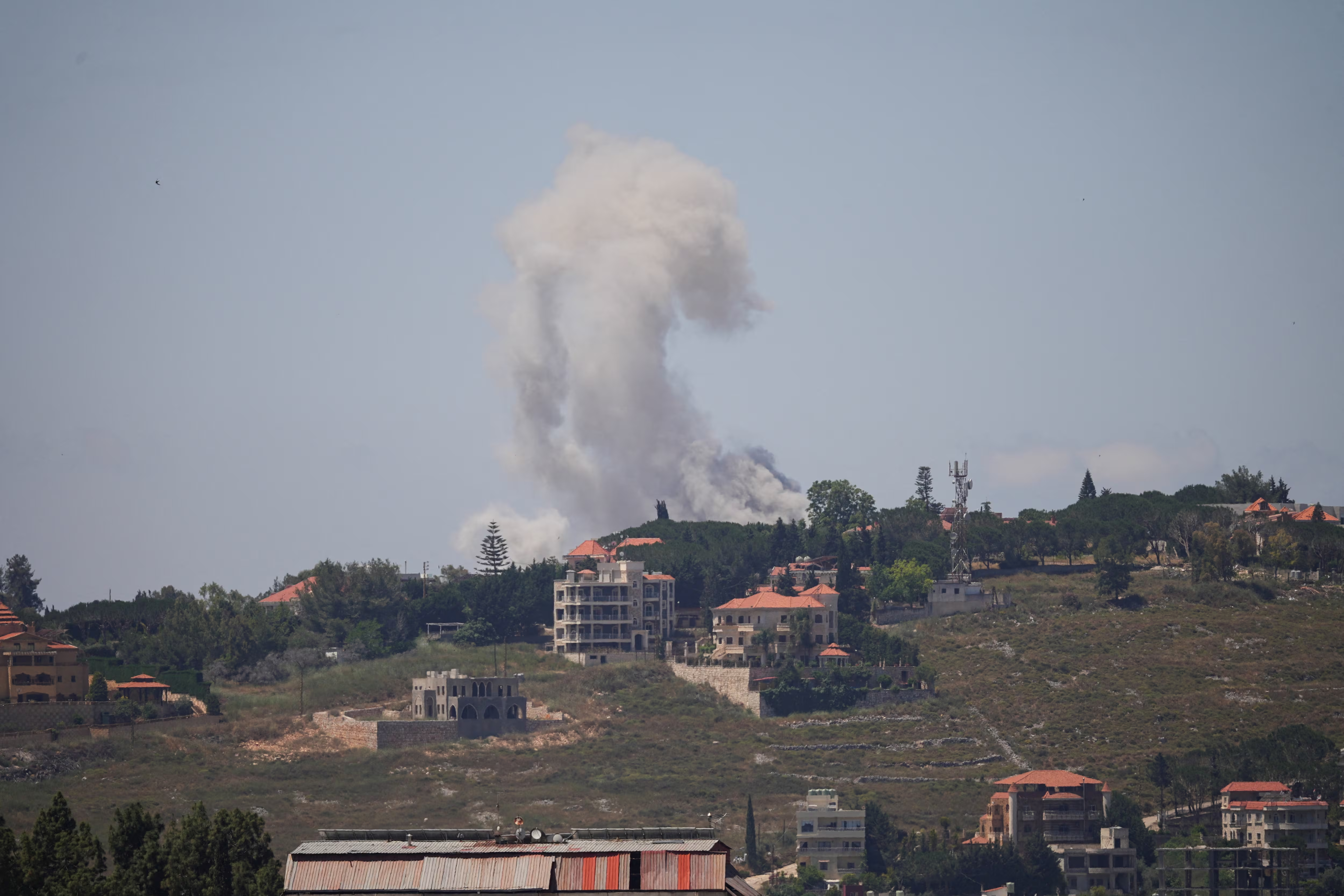
Beirut, Lebanon – Southern Lebanon witnessed a new wave of military escalation this Tuesday, June 9, 2026. Israeli warplanes launched a series of intensive airstrikes targeting the towns of Kfar Tibnit, Western Zoutar, and Adsheet. They also targeted the surroundings of Mount Safi. This field development occurs as security tensions along the border front continue to heighten. As a result, serious questions have been raised about the strategic nature of these strikes.
Field sources reported that the warplanes executed their attacks in successive waves, accompanied by low-altitude flights and repeated sonic booms. These created loud explosions that alarmed residents in neighboring villages. The sudden bombardment prompted a number of families to flee toward safer areas. In this atmosphere, caution and anxiety are widespread.
Emergency Response in the Field
In a related context, Civil Defense and Red Cross teams mobilized immediately after the shelling ceased. Despite the ongoing field tension, rescue teams are attempting to comb the affected sites. They want to ensure there are no casualties or people trapped under rubble. As of this report, no official statement has been released clarifying the human toll or the nature of the targeted sites. Security conditions continue to hinder access to some areas.
International Fear of Wider Confrontation
Furthermore, this military escalation cannot be separated from the broader regional context. Observers emphasize that repeatedly targeting mountain areas and the outskirts of towns suggests an attempt to degrade defensive capabilities in the south, which increases the risk of the situation sliding into an all-out confrontation with unpredictable consequences.
On the other hand, international diplomatic efforts are continuing to pressure all parties to exercise restraint. However, on the ground, the southern front remains extremely fragile. The warring parties exchange strikes, while the residents of southern Lebanon live under the constant sound of aircraft and artillery. These sounds have not ceased for months.
In conclusion, the continued military escalation places southern Lebanon before complex scenarios. While observers await official data on the latest airstrikes, the fundamental question remains regarding the future of regional stability and whether diplomatic efforts will succeed in curbing this tension before it spirals out of control.