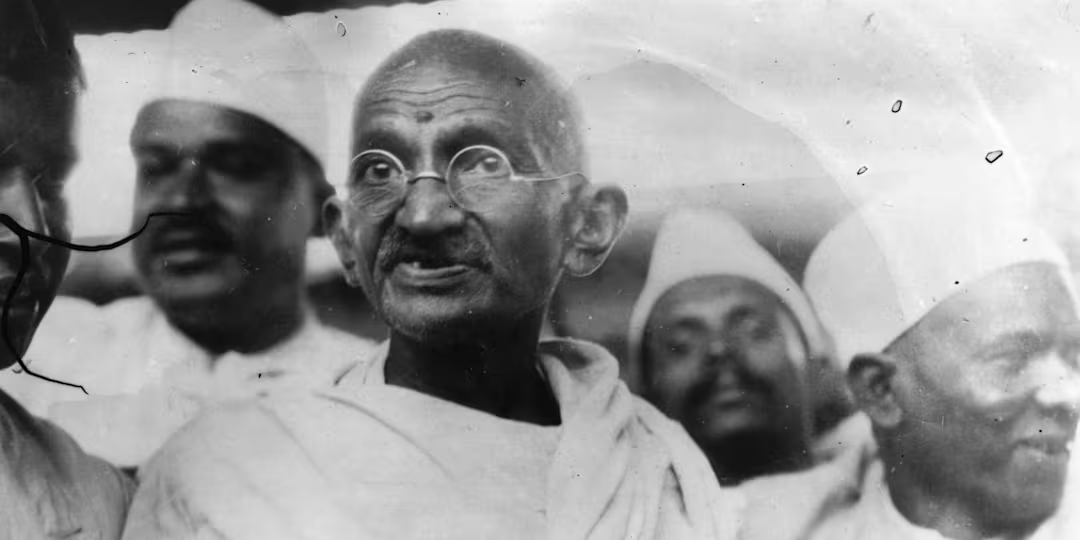
New Delhi, India – Mahatma Gandhi is undoubtedly one of the most prominent symbols of peaceful struggle in modern history. His name has been closely linked to the concept of civil disobedience. This approach later became the main and effective tool in confronting British colonialism in India. But where did the spark of this revolutionary idea begin?
On the other hand, the first features of this militant approach date back to Gandhi’s early activities in South Africa at the beginning of the twentieth century. He began then by organizing bold peaceful protests against racist laws. These laws imposed unjust restrictions on the Indian community there. Gandhi firmly rejected violence as a means of change, believing in the power of popular will.
Birth of “Satyagraha” Philosophy from the Womb of Suffering
In a related context, during that period, Gandhi led boycott campaigns and organized strikes. These campaigns included refraining from paying unjust taxes. They also included rejecting laws that institutionalized discrimination. These movements formed the first nucleus of organized civil disobedience, which stunned the colonial authorities at the time.
Furthermore, historians confirm that these experiences were the major turning point in Gandhi’s political thought. Through his suffering and struggle, he formulated his unique philosophy based on “Satyagraha.” This word means “truth force” and peaceful resistance derived from ethics and principles.
From South Africa to the Liberation of India
On another note, this inspiring experience later moved to Indian lands. It became the solid foundation for independence movements against British colonialism. This philosophy turned into one of the most successful and powerful models of peaceful struggle in the modern world. Gandhi proved that words and a peaceful stance are stronger than weapons.
In conclusion, the lessons of civil disobedience established by Mahatma Gandhi still inspire rights movements around the world. He taught us that rights are won through steadfastness and moral resistance. Gandhi’s story remains a witness that change begins with a brave idea executed peacefully.