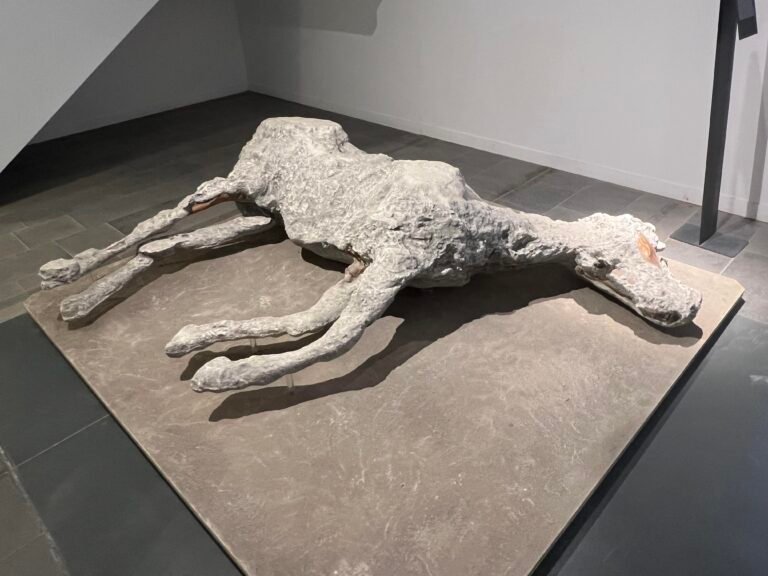
Rome, Italy | In a breathtaking archaeological discovery, recent excavations in the Italian region of Pompeii revealed a horse skeleton. It is believed that this animal was desperately trying to escape in the first moments of the historic eruption of Mount Vesuvius about 2,000 years ago. This discovery is one of the most poignant scenes reflecting the tragedy of the disaster that led to the demise of an entire city.
On the other hand, archaeologists confirmed that the horse remains were found in a position suggesting rapid movement. This suggests it was tied or equipped to escape with its owner. Before being caught by the deadly volcanic cloud and hot ash. Which covered the city of Pompeii completely in a short time. This terrifying moment froze in the record of history, conveying to us the details of the final moments of the victims.
The Speed of Disaster and Frozen Time in Pompeii
In a related context, experts point out that the flow speed of volcanic ash and gases was astonishing. This speed was sufficient to bury the city under thick layers in just a few hours. This dense volcanic cover played a pivotal role in “historical preservation.” Where these layers kept many vital details in a very rare frozen state.
Furthermore, researchers explain that this discovery adds a deep human dimension. The tragedy experienced by Pompeii was not limited to humans. It included animals and the entire vital infrastructure with all its daily details. These remains tell a painful story of an unfinished escape journey under the weight of nature’s wrath.
Pompeii: An Open Window into Ancient Life
On another note, the city of Pompeii remains one of the most important archaeological sites globally. Discoveries there continue to provide us with vivid scenes. We see a life that stopped suddenly under the ash of Mount Vesuvius in 79 AD. These excavations continue to provide us with invaluable information. About culture and daily life in the Roman era.
In conclusion, this discovery is a strong reminder of the power of nature. How a single geological event can turn a prosperous city into an open museum of human memory. The site still holds many secrets, waiting for modern excavation tools to reveal them to the world.