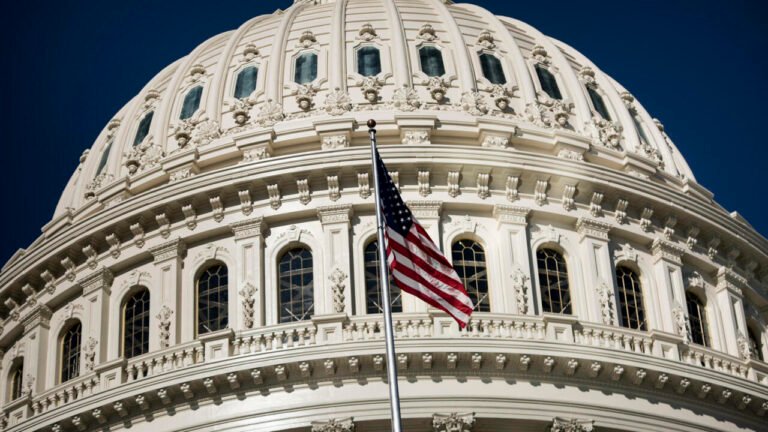
Washington – United States — A prominent US Senator declared his absolute endorsement of the firm demands and prerequisites outlined by US President Donald Trump regarding the vital necessity of guaranteeing freedom of navigation through the strategic Strait of Hormuz. The Senator reinforced that this critical waterway must remain entirely unobstructed and secure for global trade and international energy supply chains, insulated from military threats or arbitrary bottlenecks.
The Strait of Hormuz: A Non-Negotiable Economic Artery
The Senator highlighted in his press briefings that maritime stability inside the Strait of Hormuz represents a supreme strategic interest for the United States and its global allies. This vital status stems from the chokepoint’s foundational role in channeling and insulating a massive percentage of worldwide petroleum and liquefied natural gas ($LNG$) exports. The American lawmaker issued a stark warning that any security disruptions or tactical skirmishes within this volatile corridor would immediately trigger catastrophic, negative ripples across global energy markets and the macro-economy.
Blocking Nuclear Proliferation and Maintaining the Pressure Complex
In the same context, the US official emphasized an absolute urgency to permanently block Iran from developing or acquiring military-grade nuclear weapons capabilities. He categorized the containment of the Iranian nuclear program as the highest immediate priority for both regional and international safety paradigms. The high-ranking Senator affirmed that Washington is systemically required to sustain and fortify its multi-layered political leverage, comprehensive economic sanctions, and aggressive diplomatic counter-maneuvers to guarantee Tehran’s total compliance with relevant global pacts and prevent any technical evasions.
Multilateral Synchronization to Safeguard Middle East Peace
He added that the United States must operate in fluid, continuous synchronization with its international and regional allies to insulate the sector’s geography. Such cooperation is designed to counter any escalatory steps that could accelerate friction levels or undermine the fragile equilibrium of the Middle East, noting that the defense of international maritime corridors and maritime chokepoints constitutes a structural, inseparable segment of global security architectures.
These authoritative legislative declarations manifest amidst an unyielding global debate over the survival of the Iranian nuclear framework and spiking geostrategic frictions. These dynamics operate alongside escalating systemic anxieties surrounding shipping security in the Arabian Gulf and the Strait of Hormuz, universally quantified as one of the world’s premier strategic arteries for energy commerce and a foundational safety valve for the global marketplace.