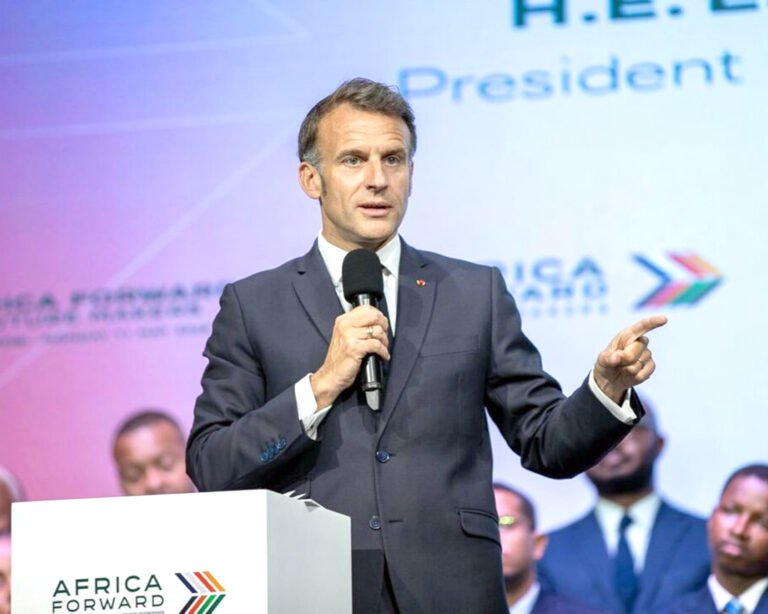
Paris, France – French President Emmanuel Macron announced a new investment plan for Africa worth up to €23 billion. This move aims to strengthen economic and development partnerships with African nations amidst growing international competition for influence on the continent.
Africa and French investments
During an international economic conference focused on the future of cooperation with Africa, Macron affirmed
that French investments will concentrate on infrastructure, renewable energy, technology, education, and healthcare.
He emphasized that Paris seeks to build a “balanced partnership” based on shared interests and support for sustainable development.
The French president explained that Africa represents one of the most promising markets globally.
He also noted that strengthening economic and developmental stability on the continent has a direct impact on the global economy.
Furthermore, it contributes to addressing the challenges of illegal immigration, poverty, and climate change.
Fair partnerships
In contrast, Kenyan President William Ruto stressed the need to respect the sovereignty of African nations
and to refrain from imposing any political or economic dictates on them under the guise of aid and investment.
He affirmed that the continent seeks equitable partnerships
that preserve national decision-making independence and serve the interests of African peoples.
Ruto stated that Africa no longer accepts traditional tutelage policies.
He also noted that African countries now possess a clear vision for managing
their resources and strengthening their economic capabilities, free from any external pressures.
Investment and strategic projects
These statements come at a time when the African continent is witnessing escalating competition
among major international powers, particularly France, China, Russia, and the United States.
This competition aims to secure investment and strategic projects within African markets,
which are rich in natural resources and possess a highly strategic geographic location.
Observers believe that the announcement of new French investments carries both political and economic dimensions.
This is especially significant given the decline in French influence in some West African countries in recent years.
Paris is also attempting to rebuild its relations with the continent on new foundations
that are more flexible and respectful of the specific circumstances of African nations.