Moscow, Russia – Russia has entered the fray in the escalating crisis in the Persian Gulf region, warning of catastrophic consequences from the US decision to impose a naval blockade on the Strait of Hormuz. In an official response to President Donald Trump’s statements, Kremlin spokesman Dmitry Peskov asserted that such unilateral actions would have severe negative repercussions for global markets and the stability of energy supplies. This could lead to economic disruptions of unpredictable magnitude.
Zero Hour and the American Siege
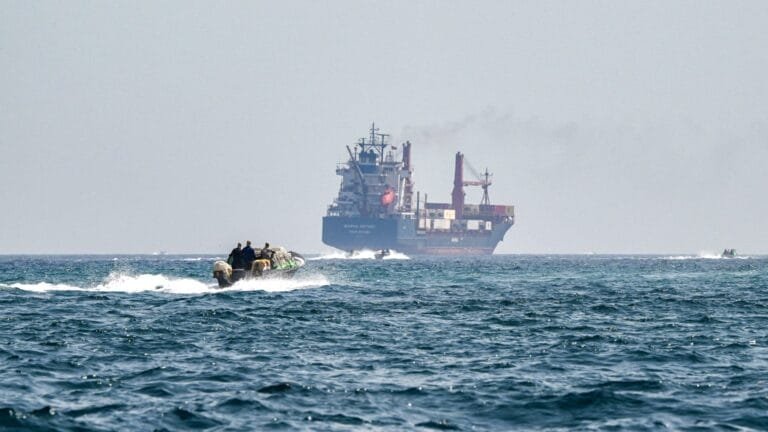
The Russian warnings come at a sensitive time, as the US Central Command (CENTCOM) announced that a comprehensive naval blockade against shipping to and from Iranian ports would begin on Monday, April 13, at 5:30 PM Tehran time.
This move represents the culmination of pressure exerted by Donald Trump on Tehran following the collapse of the Islamabad negotiations. The decision aims to bring Iranian oil exports to zero and completely paralyze its trade.
The Russian initiative and the Iranian nuclear program
On the nuclear front, the Kremlin spokesman revealed that Russia’s offer to receive and store enriched uranium from Iran “remains valid and in place,” in an attempt to defuse the nuclear crisis.
However, Peskov noted that no formal request to implement this arrangement has yet been submitted by the parties involved. This reflects the diplomatic stalemate that precedes a potential military escalation on the ground.
Breaking agreements and accusing Washington
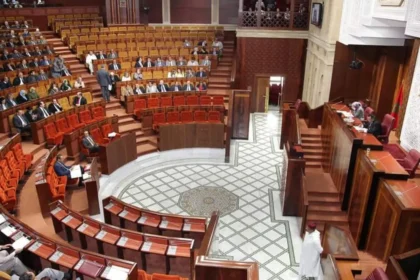
In the same vein, Ali Nikzad, the Iranian parliament’s deputy speaker, stated that Tehran had demonstrated considerable flexibility to prove its good faith, announcing its readiness to dilute 450 kilograms of enriched uranium.
Nikzad explained that the original plan involved establishing an international coalition, including the United States and Saudi Arabia, to oversee the dilution process within Iran. However, Washington and Riyadh “reneged on the agreement,” pushing matters to the brink. Observers believe that Russia’s position is an attempt to balance the scales and prevent a slide into a full-blown military confrontation in the world’s most vital waterway. They also emphasize that military solutions and a naval blockade would only further complicate the situation. This comes amid fears of a potential Iranian response targeting international shipping in retaliation for what Tehran has termed “American piracy.”