London, Britain – Amid escalating military tensions in the Arabian Gulf region, Britain and France have outlined their approach to the Iranian crisis. This comes amid attempts to balance protecting international shipping with avoiding a direct armed conflict. British Prime Minister Keir Starmer affirmed on Monday that his country will not be drawn into a war with Iran, regardless of the pressure. He also emphasized that London will not support a policy of “coercive control” of the Strait of Hormuz.
Starmer: Diplomacy first
In an interview with BBC Radio 5 Live, Starmer explained that fully reopening the Strait of Hormuz is a top priority and vital to the global economy. He added, “I believe it is essential that the strait be fully reopened, and that has been the focus of our efforts over the past period. We will continue to work towards this through all available channels.”
Starmer’s comments come at a highly sensitive time. They followed reports from shipping data companies of a near-complete halt to vessel traffic in the strait after US President Donald Trump announced a comprehensive naval blockade of Iranian ports.
French-British initiative
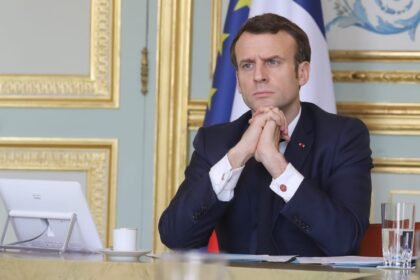
On the other side of the English Channel, French President Emmanuel Macron announced a joint diplomatic and military initiative with Britain.
Macron stated that Paris, in cooperation with London, will soon host an international conference focused on restoring freedom of navigation in the Strait of Hormuz. He emphasized that any naval force formed would be purely defensive in nature and solely peaceful in its objectives. He affirmed that it would remain independent of the warring parties in the conflict.
Multinational mission
Macron wrote on the X platform: “In the coming days, we will organize a conference with Britain and other countries willing to join us in a multinational peacekeeping mission aimed at restoring freedom of navigation.”
He added that the mission is scheduled to be deployed as soon as conditions on the ground allow. This is seen as a European attempt to offer an alternative to Washington’s “total blockade” policy. It also aims to avoid a direct confrontation with the Iranian Revolutionary Guard, which has threatened to target any military vessels approaching the Strait. This Franco-British coordination reflects the desire of European powers to maintain global energy flows and protect their commercial interests. Furthermore, it underscores the importance of maintaining a safe distance to prevent the crisis from escalating into a full-blown regional military confrontation, of which Britain and France could be the first to suffer.