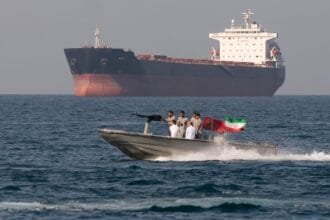
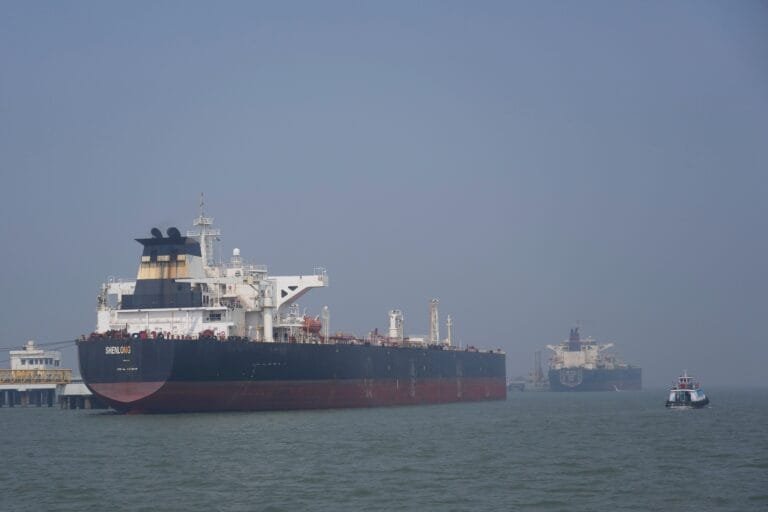
Seoul, South Korea – Despite the “last-hour breakthrough” and temporary ceasefire agreement between the United States and Iran, the on-ground reality in the Strait of Hormuz remains constrained by severe maritime congestion.
In its first official post-truce assessment, South Korea warned that diplomatic progress has yet to translate into actual shipping flow in one of the world’s most critical energy corridors.
Ongoing Uncertainty
South Korea’s National Security Advisor, Wi Sung-lac, stated that the ceasefire has not immediately changed operational conditions.
Speaking at a press briefing, he noted that shipping traffic through the Strait of Hormuz remains far from normal levels, describing the situation as “persistent uncertainty” that will continue to impact global supply chains.
Bottleneck Crisis: 2,000 Ships Waiting
The Korean report revealed striking figures highlighting the scale of the logistical challenge:
- Massive backlog: Nearly 2,000 ships are currently stranded around the Strait of Hormuz.
- Transit challenge: Clearing this backlog at once presents a major navigational and logistical hurdle.
- Security risks: Securing shipping routes for such volumes remains a complex geopolitical and safety challenge, even amid reduced hostilities.
Korea’s Response: Securing Fleet and Seeking Alternatives
The South Korea government is prioritizing the safety of its fleet, closely monitoring 26 Korean-flagged vessels stranded in the area. Alongside diplomatic efforts, Seoul has begun developing a “diversification strategy” by:
A- Seeking alternative sources for crude oil and naphtha supplies outside the conflict zone.
B- Intensifying coordination with relevant countries to ensure safe corridors and facilitate passage as soon as possible.
Internationalization of the Crisis
Wi Sung-lac noted that international cooperation to secure maritime routes is becoming increasingly coordinated, led by the United Kingdom and France. South Korea is currently evaluating its potential role in these discussions, focusing on practical solutions that consider both operational and political complexities.
The report suggests that the “two-week truce” granted by Donald Trump to Iran is only the beginning of a long and challenging path; clearing the maritime backlog and ensuring safe passage for 2,000 ships will require more than a formal agreement—it demands concrete international guarantees to restore confidence among global shipping companies.