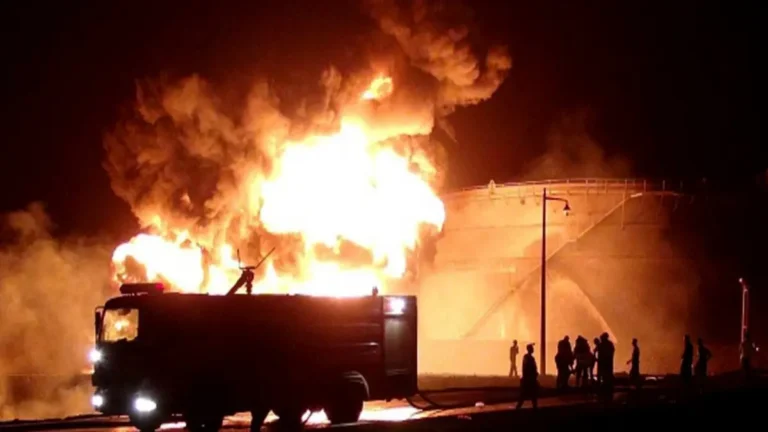
Tehran, Iran – In a development reflecting the widening scope of the escalating “energy war” in the region, the Iranian news agency Fars reported a series of powerful explosions early this morning targeting facilities at the South Pars petrochemical complex in the coastal city of Asaluyeh.
The announcement was made via a brief post on the agency’s X platform. However, it did not disclose the extent of the material damage or any casualties. This comes amidst an official blackout imposed by the Iranian authorities regarding the affected strategic sites.
Context of the attacks: Depletion of infrastructure
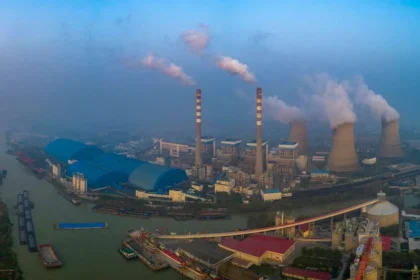
The targeting of Asaluyeh comes as the latest in a series of airstrikes described as the most intense yet. Recent satellite imagery, analyzed by an open-source team, revealed widespread damage to Iranian energy infrastructure during March. The damage included power plants, water treatment facilities, and oil storage depots. A major refinery south of Tehran was also damaged.
Specifically in Asaluyeh, images taken on March 29 showed gas processing and production units malfunctioning. This resulted in a temporary paralysis of the operational capacity of the gas sector, the lifeblood of the Iranian economy.
Trump’s strategy: to dry up funding sources
The administration of US President Donald Trump has adopted an explicitly military approach targeting oil and gas facilities and related infrastructure. These facilities are the cornerstone upon which the Revolutionary Guard relies to finance its military capabilities and regional influence. Washington believes that destroying these facilities will weaken Iran’s war machine and reduce its ability to support transnational militias.
The equation of mutual deterrence
In response, Tehran did not remain idle. It retaliated by intensifying its missile and drone attacks, targeting energy and electricity infrastructure in several Gulf states (as happened on Bubiyan Island and in northern Kuwait). Tehran aims to establish a deterrent equation that will raise the cost of US-Israeli escalation. Observers believe that today’s explosions in Asaluyeh represent the peak of tensions. Simultaneously, the two sides are exchanging blows in the “vital nerve” of the global economy, threatening to ignite a broad maritime and aerial front. The situation could easily spiral out of control given the current absence of any prospect for diplomatic de-escalation.