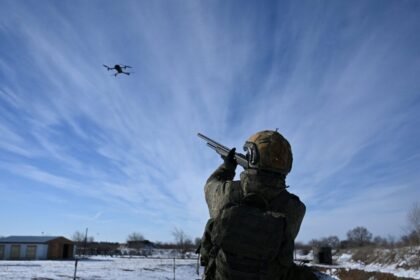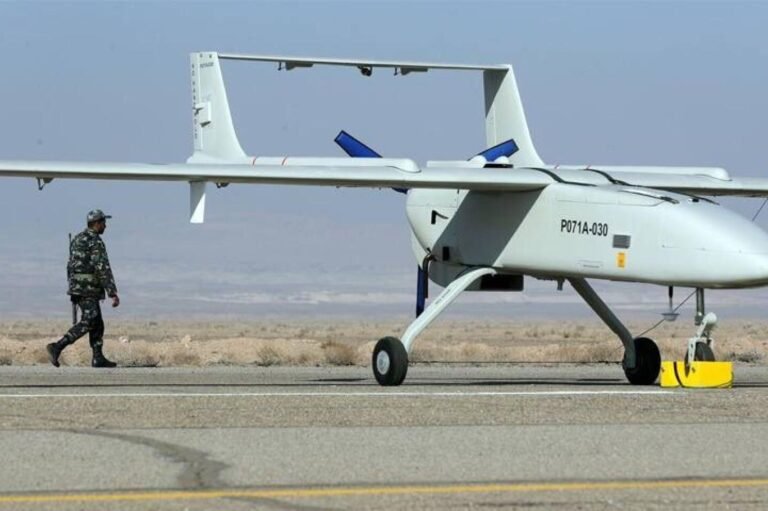
Tehran, Iran – In a dramatic military development reflecting the widening scope of the regional confrontation, Tehran announced today that it had launched a massive aerial attack targeting Kuwait’s Bubiyan Island. Colonel Ebrahim Zolfaghari, spokesman for the Khatam al-Anbiya Construction Headquarters in Iran, claimed that Iranian armed forces successfully targeted US troop concentrations, satellite equipment, and ammunition depots on the island. The forces used drones in the attack.
Targeting Boubyan: Tehran’s narrative
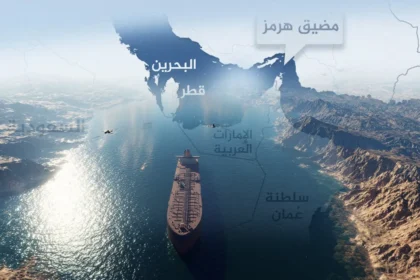
According to a televised statement broadcast by Iranian state media and reported by the BBC, Zulfiqari claimed that US forces had been moved to Bubiyan Island—the largest of Kuwait’s coastal islands in the northwest Gulf—after Camp Arifjan was subjected to repeated missile attacks. Tehran believes this military move is aimed at disrupting Washington’s satellite communications and battle management systems in the region.
Civilian casualties and defensive response
On the Kuwaiti side, official authorities confirmed damage and injuries resulting from the attack. The Kuwaiti Ministry of Health announced that six people sustained injuries of varying severity after shrapnel and projectiles fell in a residential area in the north of the country. The ministry explained in a post on its “X” platform (formerly Twitter) that ambulance crews responded early Monday morning to reports of falling debris resulting from air defenses intercepting Iranian attacks. The injuries ranged from superficial wounds and hearing disturbances to falls caused by the force of the explosions.
The Kuwaiti army is on high alert.
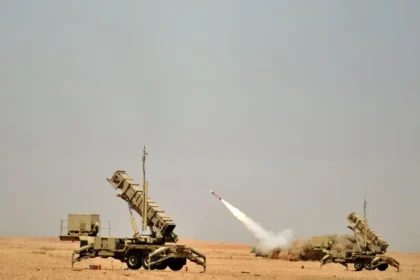
For its part, the Kuwaiti army announced that its air defense systems were operating at full capacity to track and intercept missiles and drones launched from Iranian territory toward Kuwaiti airspace. This direct attack on Kuwaiti territory has raised tensions to unprecedented levels. It comes amidst widespread regional condemnation of what Kuwait described as a “heinous aggression” targeting populated residential areas, threatening the security and stability of navigation and supplies in the northern Arabian Gulf. While political circles await the American response to the alleged targeting of its forces in Bubiyan, attention remains focused on the faltering de-escalation efforts. These efforts are being led by international parties to avert a “full-blown conflagration.”