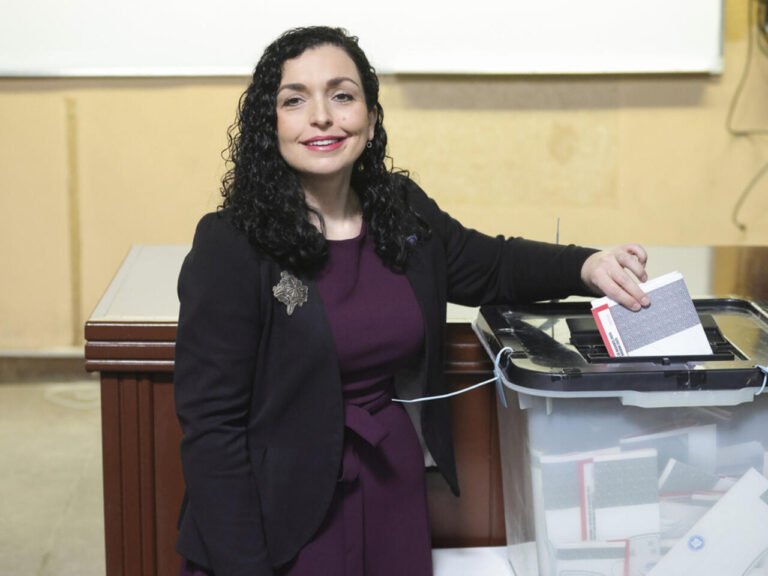
Pristina, Kosovo – The Republic of Kosovo entered a new phase of political uncertainty following the official end of President Vjosa Osmani’s five-year term on Saturday. Parliament failed to elect a successor.
This constitutional impasse has led to the temporary transfer of presidential powers to the Speaker of Parliament, Albulina Haksiu, of the center-left Vetëvendosje (Self-Determination) party. She is thus serving as acting president.
Conflict of powers and constitutional deadlines
This shift comes after political forces failed to garner enough support for Osmani for a second term. The 120-seat parliament also failed to reach the two-thirds majority required to elect a new president.
“I believe the assembly will elect a new president as soon as possible,” Osmani said during the handover ceremony, expressing her pride that her successor was a woman, which she described as a personal wish fulfilled. Although the law allows the acting president to remain in office for six months, the Constitutional Court has imposed a deadline of April 28 for the legislature to elect a president.
If parliament fails to resolve the issue within this short period, Kosovo will be legally obligated to dissolve parliament. Early legislative elections would then have to be held within 45 days, marking the third such election in approximately one year.
Political deadlock and an uncertain future
The Balkan nation has been gripped by a deep political crisis since last year’s inconclusive general election.
Although Prime Minister Albin Kurti’s party won the most seats in the December election, it lacks the comfortable majority needed to secure the election of its presidential candidate.
The situation was further complicated by the Constitutional Court’s decision last March to overturn a decree issued by Osmani dissolving parliament, upholding Kurti’s appeal. The court also ordered lawmakers to return to their seats to elect a president or face the prospect of new elections. International and domestic observers are watching closely to see if Pristina’s political elites can reach a compromise before the end of this month. This could avert a complete institutional paralysis in a region already plagued by security and political instability.