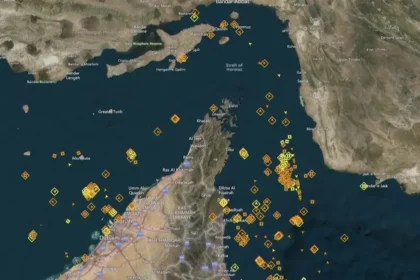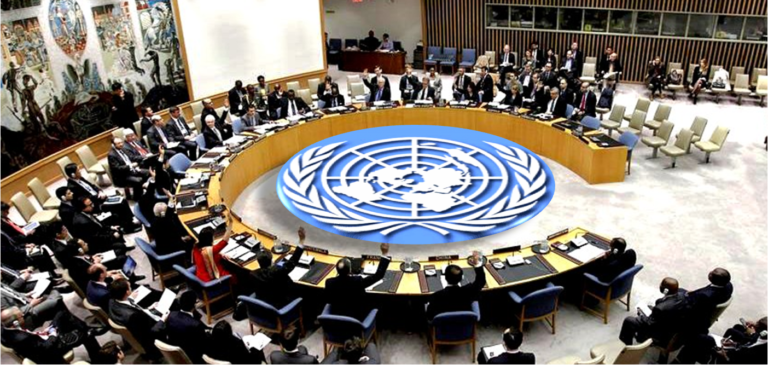
New York, USA – As the world awaits news on the future of global energy supplies, UN diplomats announced the postponement of a Security Council session scheduled to vote on a draft resolution submitted by the Kingdom of Bahrain. The resolution aims to protect commercial shipping in the Strait of Hormuz and the surrounding region.
The session was initially scheduled for Friday but was postponed until Saturday to allow the 15 members more time to discuss the resolution’s provisions. Manama drafted the resolution in its capacity as the current president of the Council.
Military mandate and international reservations
The Bahraini draft resolution authorizes the use of “all necessary defensive measures” to ensure the safety of commercial shipping. This clause enjoys strong support from the United States, which seeks international cover for its maritime actions.
Conversely, the obstacle of a Chinese veto stands out; Beijing has explicitly stated its opposition to any wording that includes an explicit authorization for the use of military force. It has also called for resolving the crisis through diplomatic channels to prevent an escalation of tensions in the waterway. The waterway’s importance stems from China’s reliance on it for its oil imports.
Context of military escalation
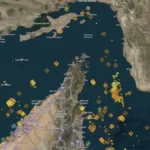
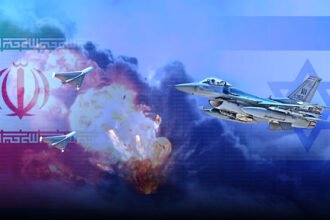
These diplomatic moves come after a turbulent month that began on February 28, 2016. On that day, US and Israeli forces launched a series of strikes targeting Iranian nuclear and missile sites, air defense facilities, and other infrastructure. In response, the Islamic Revolutionary Guard Corps effectively closed the Strait of Hormuz. This resulted in a historic surge in global oil prices and threatened supply chains.
Washington’s conditions for a ceasefire
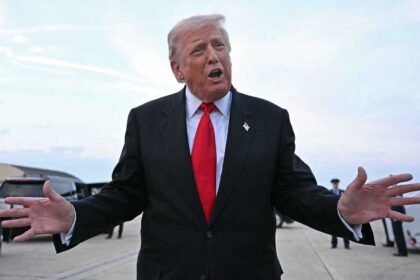
On the political front, US President Donald Trump revealed that Tehran had formally requested a ceasefire. However, he set a non-negotiable condition, asserting that he would not consider the request until the Strait of Hormuz was fully reopened to international navigation.
Trump also issued a firm call to Gulf energy-dependent nations to take concrete steps and contribute to reopening the vital waterway. He emphasized that maritime security is a shared international responsibility.
Saturday’s crucial meeting will determine whether the international community will align itself with Bahrain’s position or whether the stalemate will persist due to the deep divisions in major political stances.