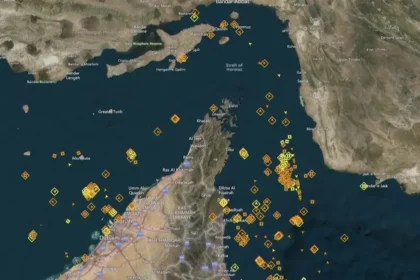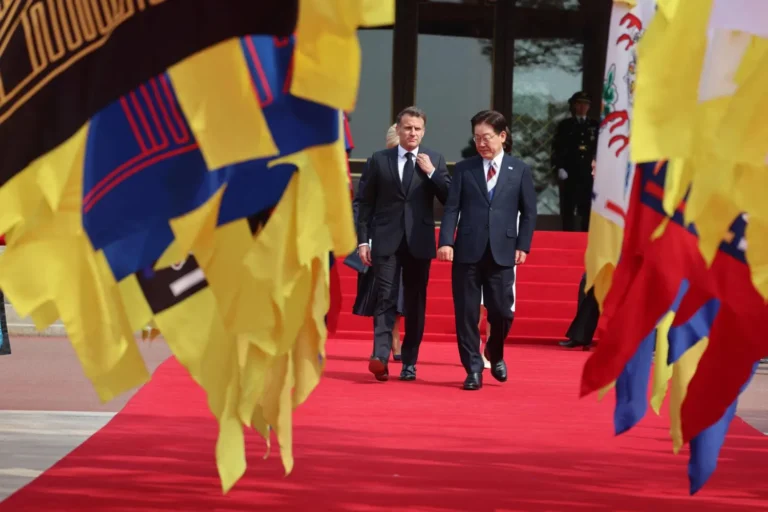
Seoul, South Korea – In a significant diplomatic move aimed at breaking the military deadlock in the vital waterway, French President Emmanuel Macron announced the possibility of forging a strategic partnership with South Korea to stabilize the Strait of Hormuz. The remarks followed a summit Macron held with South Korean President Lee Jae-myung in Seoul on Friday. This comes at a time when the world is facing severe economic repercussions due to the disruption of oil and gas flows through the strait, which carries a fifth of the world’s energy supply.
A strategic move amidst the bombardment.
Macron confirmed that the talks focused extensively on the volatile situation in the Middle East, noting that France and Seoul could take “useful steps” to restore calm to the Strait of Hormuz. However, he linked this move to a de-escalation of the direct conflict between Washington and Tehran.
The French president explained that the top priority is halting the bombing and strengthening defense and strategic relations. This comes in response to the energy crises that have shaken markets and led to a historic price surge.
Trump’s criticisms and the European response
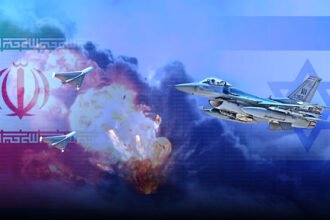
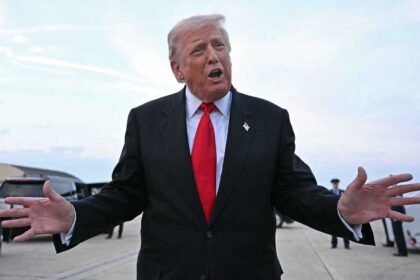
This Franco-Korean rapprochement comes amid immense pressure from US President Donald Trump, who threatened on social media to “totally destroy Iran” if it reopened the Strait of Hormuz. He also sharply criticized Seoul and Paris for not engaging in direct military action.
While Trump described NATO as a “paper tiger,” Macron responded by calling on all parties to “be serious.” He argued that questioning the alliance’s commitments undermines international trust. In a practical move independent of the US, Macron revealed that France, Britain, and some 40 other countries were engaged in intensive consultations. These consultations focused on discussing plans to reopen the Strait through diplomatic channels with Iran. He emphasized that direct military intervention was “unlikely” at present, and that the best alternative was “consultation with Tehran.” This consultation aims to establish a long-term framework for monitoring Iran’s nuclear capabilities and ensuring the safe passage of ships.
Economic and nuclear partnership that transcends crises
On the bilateral level, the summit was not limited to political issues; both sides pledged to increase trade volume to $20 billion by 2030. The Korea Hydro & Nuclear Power Corporation signed agreements with the French companies Orano and Framatome for the supply of raw materials. This paves the way for joint entry into the global nuclear market.
The understandings also covered artificial intelligence, semiconductors, and the supply chains of critical minerals. This comes as both countries seek to protect their economies against energy shocks resulting from regional conflict. Macron concluded his visit by inviting South Korea to participate in the G7 summit scheduled to be held in France next June. He emphasized that coordination with major Asian powers has become an urgent necessity to ensure the security of international navigation and the stability of global supply chains.