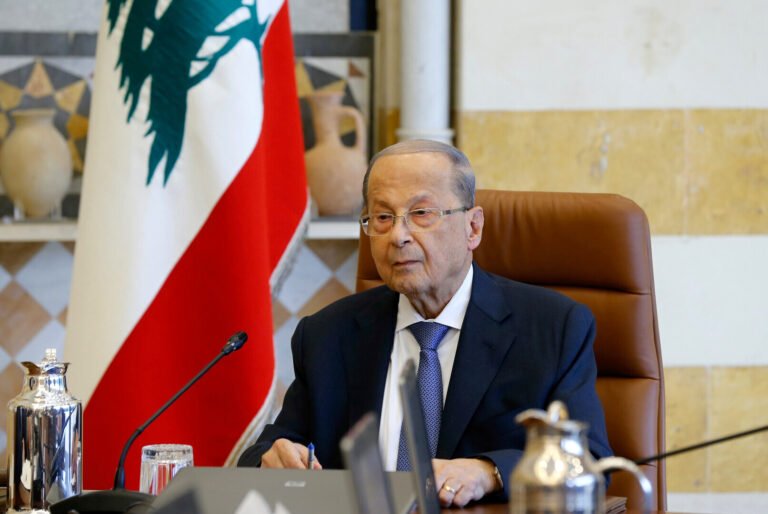
Beirut, Lebanon – In a decisive stance reflecting an attempt to stabilize the domestic situation, Lebanese President Michel Aoun affirmed his commitment to the principle of the state’s monopoly on the use of force. He also categorically rejected dragging Lebanon into regional conflicts that do not serve its national interests.
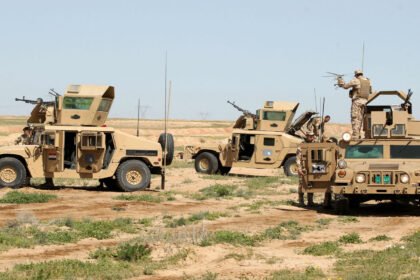
Aoun emphasized that preserving the state’s sovereignty requires that official institutions, foremost among them the army, be the sole entities authorized to bear arms and make decisions regarding war and peace. This comes amidst escalating regional tensions surrounding Lebanon.
This statement comes at a sensitive time, as fears grow that regional conflicts could spill over into Lebanon, especially with the intensification of confrontations on multiple fronts. Consequently, this situation presents the country with complex security challenges.
Observers believe that Aoun’s emphasis on this principle reflects an awareness of the magnitude of the risks that could result from Lebanon’s involvement in any regional confrontation. This comes amidst a fragile economic situation and internal political divisions.
The stance also carries a clear message to internal and external powers: Lebanon cannot afford new military adventures. Furthermore, the priority must be protecting internal stability and avoiding a slide into open conflict.
However, implementing this approach remains contingent on delicate balances within the Lebanese arena, where political and security considerations intertwine. For this reason, the issue of weapons becomes one of the most complex and sensitive matters. The Lebanese scene today stands at a crossroads, caught between calls to consolidate state authority and the pressures of the regional reality. The most important question remains: Will Lebanon succeed in maintaining its neutrality, or will developments force it into a situation it cannot accept?