Baghdad, Iraq – The Iraqi Civil Aviation Authority announced on Thursday a sovereign decision to extend the closure of Iraqi airspace to all incoming, outgoing, and transit flights for an additional 72 hours.
This precautionary measure comes at a time when Iraq and the region are witnessing a large-scale military escalation. This escalation has also placed the country at the heart of a major power struggle.
Losses within the ranks of the “Popular Mobilization Forces”
The authority explained in an official statement published on its Facebook page that the decision would be implemented starting at 12:00 PM on Thursday and would continue until 12:00 PM on Sunday.
The statement emphasized that this “temporary precautionary measure” was based on the ongoing assessment of the security situation on the ground and the rapidly evolving regional developments. It also indicated that the authorities would reassess the decision based on any new developments.
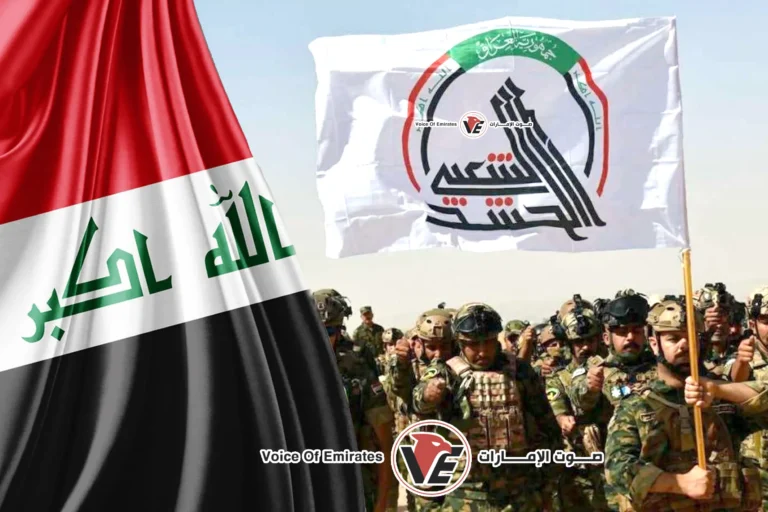
This air closure coincided with the Iraqi Popular Mobilization Forces (PMF) revealing
a heavy toll of casualties resulting from recent US military operations.
The PMF announced on Thursday that 27 of its members had been killed and 50 wounded
in a series of airstrikes targeting its headquarters since the beginning of March.
The official statistics indicated that the US had launched a total of 32 airstrikes against PMF positions.
This resulted in widespread destruction and a surge in public and political anger within Iraq.
The Iranian-American confrontation and its repercussions
These airstrikes are part of a comprehensive and ongoing US-Israeli offensive against Iran that began on February 28.
This military campaign, described as the most intense in decades, has resulted in the deaths of hundreds of people inside Iran.
Among the dead were Supreme Leader Ali Khamenei and high-ranking security and military officials.
This has created a significant leadership vacuum in Iran.
Tehran did not remain idle; it responded by launching waves of ballistic missiles and suicide drones at targets inside Israel.
Widespread Arab and international condemnations
Iran has also expanded its targeting to include what it describes as “American interests” in several Arab countries.
This has resulted in civilian casualties and significant damage to vital infrastructure and civilian property in those countries.
These cross-border Iranian attacks have been met with widespread Arab and international condemnation.
The targeted countries consider them a blatant violation of their sovereignty and a direct threat to the security of their citizens.
As this open conflict continues, Iraq finds itself in a precarious position,
caught between the hammer of American airstrikes and the anvil of Iranian retaliation.
This has prompted the Iraqi government to take drastic measures to protect
the safety of air navigation and prevent humanitarian disasters in its volatile skies.