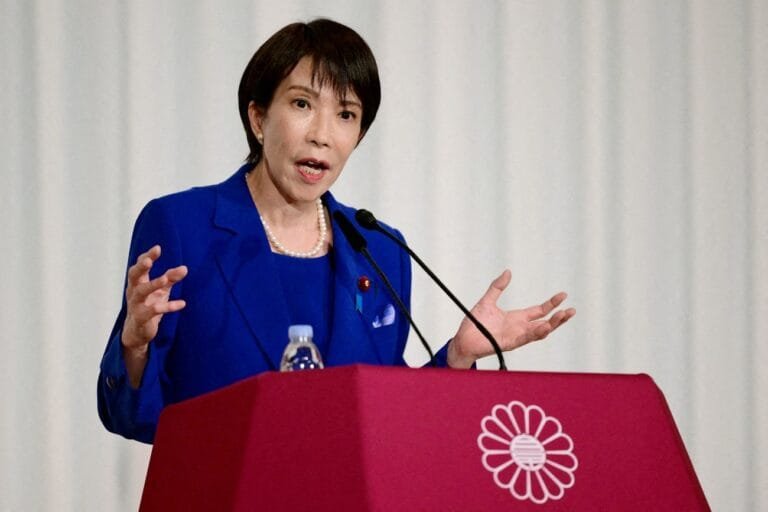
Tokyo, Japan – Japanese Prime Minister Sanae Takaichi announced Wednesday that Tokyo is “not planning at this stage” to send Japanese Self-Defense Forces to the Strait of Hormuz.
This statement comes as the strategic waterway, a vital artery for global oil supplies, is virtually paralyzed following its closure by Iranian authorities.
This has triggered widespread disruption in international energy markets.
Legal moves under parliamentary scrutiny
During a crucial meeting of the Budget Committee of the House of Councillors (the upper house of parliament), Takaichi confirmed that the Japan government is currently studying the “necessary measures” that can be taken.
She also stressed that any action would be “within the framework of the law.”
The Japanese constitution imposes strict limitations on overseas military operations.
The Japanese news agency Jiji Press quoted the prime minister as saying, “We are thoroughly examining what we can do,
including from a purely legal perspective, to ensure the safety of navigation in the straits and protect our tankers.”
Washington summit and Trump’s digital legacy
These remarks come ahead of Takaichi’s departure for Washington for a highly anticipated summit with US President Donald Trump on Thursday.
Regarding US pressure, specifically Trump’s recent request for allies to send warships to help secure the waterway,
Takaichi was firm in her response: “I will clearly inform President Trump what we can and cannot do under Japanese law.”
The US president sparked widespread controversy with a social media post last Saturday in
which he called on Japan and other countries to share the burden of military protection.
He then partially backtracked in another post on Tuesday,
indicating that the United States “does not need their help” in direct military operations against Iran.
Energy and sovereignty challenges
This crisis represents a true test for the Takaichi administration, as Japan finds itself in a difficult position.
On one hand, the country is almost entirely dependent on oil transiting the Strait of Hormuz.
On the other, it faces constitutional constraints and domestic opposition to any foreign military involvement.
While Tokyo seeks to maintain its strategic alliance with Washington, its top priority remains finding a diplomatic solution.
This would ensure the flow of energy without sliding into a full-blown military confrontation in the region.