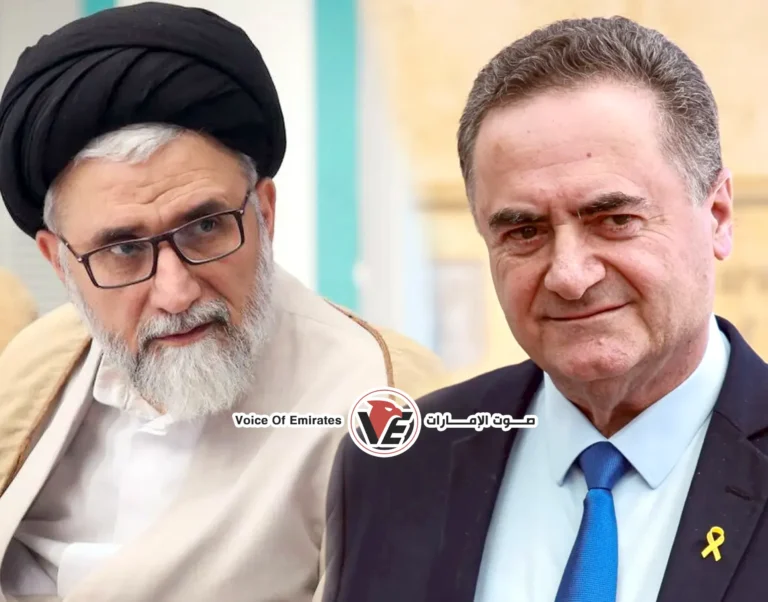
Tel Aviv, Israel – Israeli Defense Minister Yisrael Katz confirmed on Wednesday that Iranian Intelligence Minister Esmail Khatibzadeh was killed in an airstrike targeting Tehran the previous night.
The announcement came during a situation assessment meeting held by Katz in “The Pit,” the heavily fortified bunker beneath the Defense Ministry in Tel Aviv.
Senior military commanders attended the meeting, including Deputy Chief of Staff Major General Tamir Yadai
and Military Intelligence Chief Major General Shlomi Bender.
Katz: Expected Surprises
Katz warned that the coming hours would bring “expected surprises” that would constitute
a significant escalation in Israel’s war against Iran and Hezbollah in Lebanon.
The Israeli minister described Khatib as “directly responsible for the system of internal murder and repression and for protecting the pillars of the regime,
as well as his pivotal role in promoting external threats and targeting Israel’s security through regional proxies.”
Katz emphasized the firmness of the new Israeli approach, stating, “No one in Iran is immune; everyone is a target.”
He also revealed that Prime Minister Benjamin Netanyahu had authorized
the army to thwart any high-ranking Iranian official without the need for further intelligence.
Who is Ismail Al-Khatib?
Ismail Khatib, born in 1961, is considered one of the most important “black boxes” in the Iranian power structure.
His career began at the Qom seminary, where he studied under prominent scholars, granting him both religious and political legitimacy.
His close ties to the office of the late Supreme Leader, Ali Khamenei, paved the way
for his involvement in establishing the Islamic Revolutionary Guard Corps’ intelligence apparatus in 1980.
He subsequently rose through the ranks of sensitive security positions until his appointment as Minister of Intelligence in 2021.
Khatib was not merely an administrator; intelligence reports considered him the mastermind behind numerous foreign operations.
He was also one of the closest confidants of the current Supreme Leader, Mojtaba Khamenei.
Implications of the assassination of the Iranian intelligence minister
Observers believe that the assassination of such a high-profile figure in the heart of Tehran represents a massive intelligence breach and demonstrates Israel’s ability to reach sovereign and sensitive targets that were previously considered off-limits.
This strike comes at a time of unprecedented tension in the region, with attacks on Iranian sites steadily increasing.
With anticipation building for the “major surprises” promised by Katz on all fronts,
attention is now focused on the nature of the expected Iranian response.
Will Tehran limit itself to escalating through its proxies, or will the killing of
its intelligence minister push it toward a direct and comprehensive confrontation?
The question remains whether the fronts in Lebanon and Syria will erupt into full-blown conflict.
If this occurs, it could drag the region into a wide-ranging regional war, the end of which and its repercussions for global stability are unpredictable.