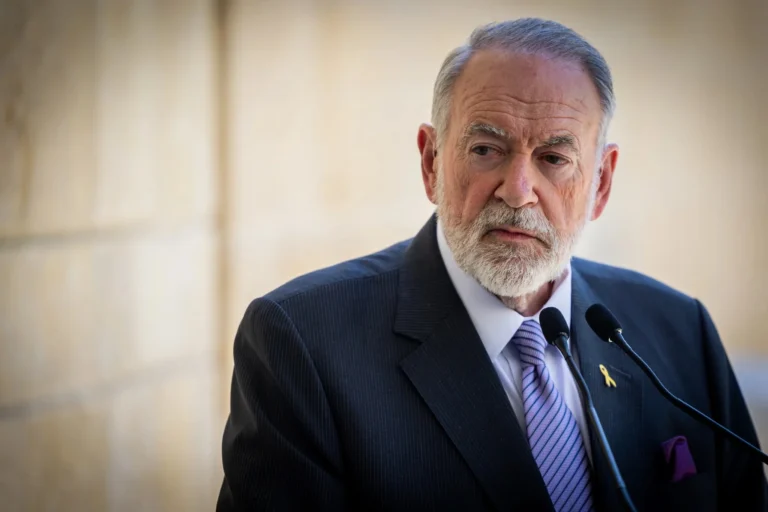
Washington, DC – US Ambassador to Israel Mike Huckabee’s remarks have sparked widespread controversy. He endorsed the idea of Israeli control over the entire Middle East based on religious texts, while simultaneously asserting that the Israeli army was “more moral” than the US military in its conduct during the Gaza war.
“Religious right” to territorial expansion
During an interview with American journalist Tucker Carlson, Huckabee argued that Israel has a “religious right” to the land, granted to it by God.
He cited passages from the Old Testament.
Carlson pointed out that the biblical promises encompass an area stretching from the Nile to the Euphrates. This would mean control over countries such as Jordan, Syria, Lebanon, and parts of Saudi Arabia, Iraq, and Turkey.
When asked if Israel had a right to that land, the American ambassador replied bluntly: “It would be fine if they took it all.”
The interview featured a heated exchange between Carlson
and the American ambassador regarding the religious justifications for war.
The discussion also touched on Israeli Prime Minister Benjamin Netanyahu’s invocation of the Amalekite text,
which historically commands the extermination of men, women, and children.
Huckabee’s reactions to civilian casualties
The US ambassador described the Gaza Health Ministry’s statistics as “dubious,” despite international organizations acknowledging that more than 17,000 children have been killed.
Huckabee claimed that some of the slain children (as young as 14) had been recruited by Hamas.
He justified their killing if they were armed, prompting Carlson to respond indignantly:
“Are you listening to yourself? Do you think a child deserves to die because they are being used by adults?”
The US ambassador strongly defended the Israeli army’s performance, considering it morally superior to the US military in wars.
These statements come from a high-ranking diplomat representing the United States in Tel Aviv.
This raises serious questions about the compatibility of these “ideological” views
with international law and the two-state solution that Washington officially advocates.