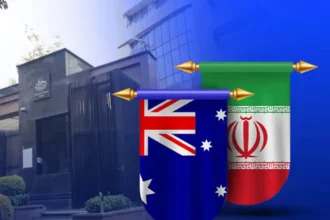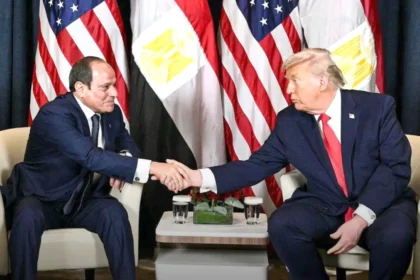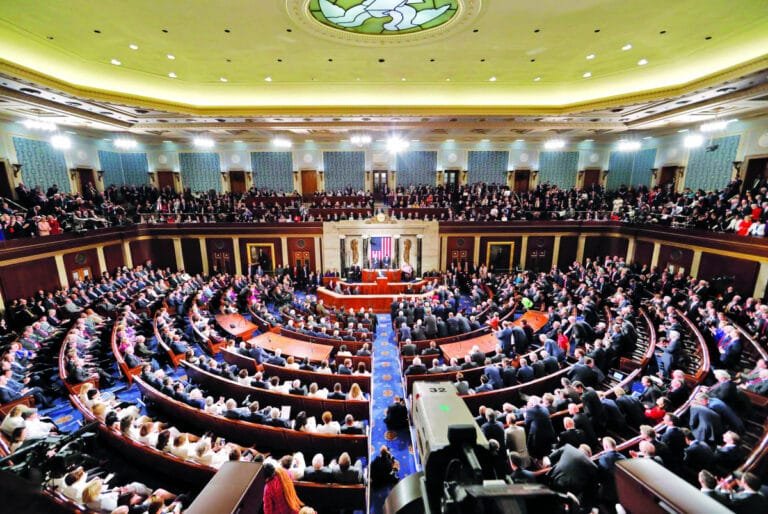
Washington, DC – The US Congress is preparing for a crucial legislative battle next week aimed at preventing President Donald Trump from launching a military attack on Iran without prior congressional approval. This move comes amid an unprecedented military escalation in the Middle East. In addition, there are explicit threats from the White House to resort to military action should the diplomatic track toward a new nuclear agreement falter.
A cross-party alliance to counter the “drums of war”
Despite the slim Republican majorities in both the Senate and the House of Representatives, a rare bipartisan alliance has emerged. This alliance seeks to restore Congress’s constitutional authority to declare war.
In the Senate: Democrat Tim Kaine and Republican Rand Paul are leading a resolution that would prohibit any hostilities against Tehran without an explicit declaration of war.
Kaine stated emphatically, “If my colleagues support war, they should have the courage to vote for it and answer to their constituents.”
In the House of Representatives: Representatives Ro Khanna (D-N) and Thomas Massie (R-N) announced their intention to push for a similar vote next week. They also warned of reports indicating a 90% probability of an attack.
Between diplomacy and the language of threats
These legislative moves coincide with complex diplomatic efforts. Iranian Foreign Minister Abbas Araqchi revealed that a draft of a new nuclear agreement is nearing completion following the Geneva talks.
He indicated that the Iranian proposal could be ready within days for review by the Supreme Leader in Tehran.
Meanwhile, President Trump did not deny his intention to escalate the situation. He confirmed to reporters at the White House that he is “already considering” limited military strikes to pressure Tehran.
Furthermore, Reuters quoted US officials as saying that military planning has reached “advanced stages.” This includes options ranging from targeted strikes to “regime change” scenarios.
Constitutional and political obstacle
The U.S. Constitution grants Congress the exclusive power to send troops to full-scale wars. However, presidents have often used “national security” loopholes to launch limited strikes.
Opponents of the resolution, including Trump supporters, argue that this legislative move “ties the president’s hands” in protecting vital U.S.
interests. As a result, this could lead to the resolution’s failure, as has happened with previous attempts.