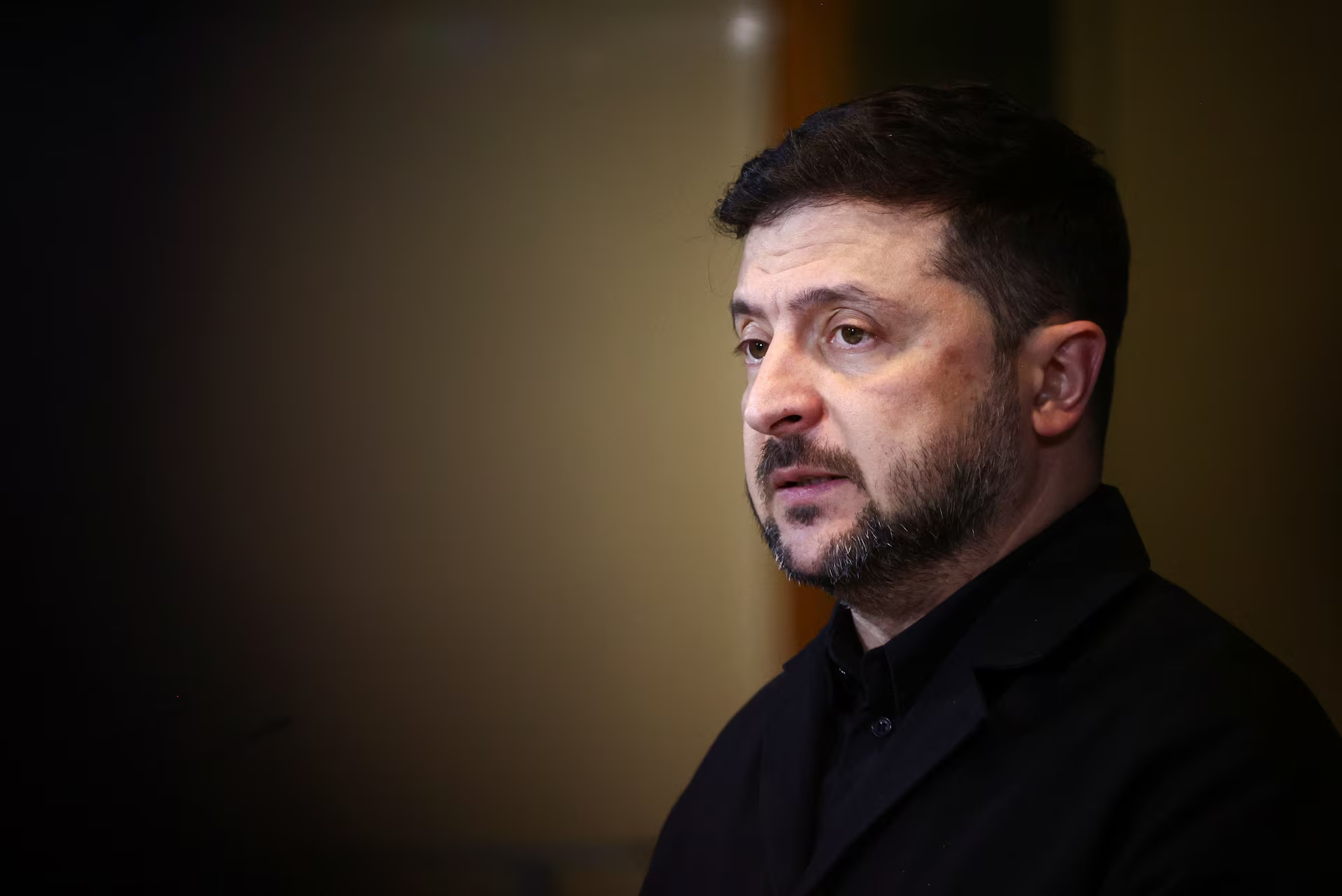
Munich, Germany – Ukrainian President Volodymyr Zelenskyy issued a stark warning during his participation in the Munich Security Conference. He asserted that Europe’s absence from the negotiating table regarding the war in Ukraine constitutes a “grave strategic error.” This could negatively impact the future of European security and threaten the continent’s stability in the coming period.
In a clear and decisive speech, Zelenskyy emphasized that Europe is not merely a political or military supporter, but a key partner in shaping any potential settlement. He also indicated that ignoring its role could create a gap in the collective security system, thus weakening the chances of reaching a lasting agreement.
He said that “any negotiations that do not fully include Europe will not reflect the geopolitical reality of the war.” He added that decisions made outside of European capitals could lead to temporary solutions lacking long-term guarantees.
The Ukrainian president affirmed that his country seeks a peace based on justice, respect for sovereignty, and territorial integrity. He rejected what he described as attempts to impose settlements that do not achieve genuine stability. He also called for enhanced coordination between the United States and the European Union, asserting that a unified Western stance is a crucial element in any negotiation process.
Zelensky’s remarks come at a time when the Munich Security Conference is witnessing intense discussions about the future of the Russian-Ukrainian war. This is taking place amidst accelerated diplomatic activity and speculation about the possibility of launching a new negotiating track that could alter the dynamics of the conflict.
Observers believe that Zelensky’s words reflect a growing concern about the potential for major international agreements to be formulated without direct European involvement. This could prompt EU member states to act decisively to ensure their presence in any future political or security arrangements.
Political assessments indicate that the Munich conference could represent a turning point in international alignments. This is especially true given the increasing talk about reordering the priorities of Western alliances in light of the ongoing war and its economic and military repercussions for Europe and the world.