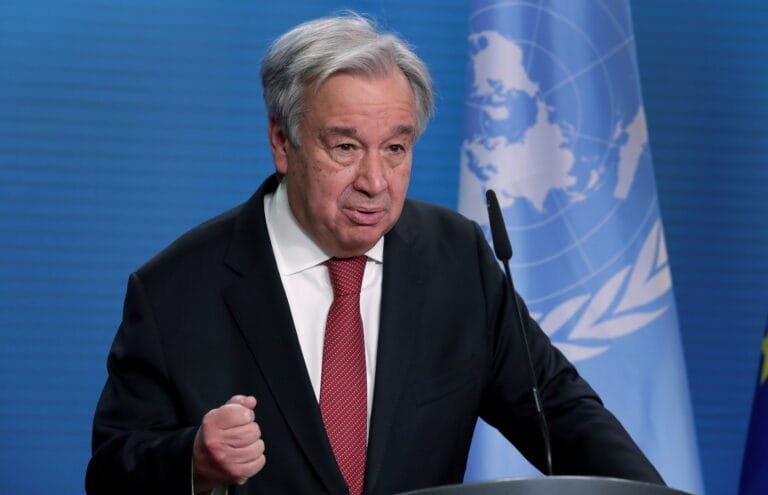
New York, USA – UN Secretary-General António Guterres affirmed that the lack of permanent African representation on the Security Council constitutes a “historical injustice” and is unacceptable. He also stressed that reforming the Council’s structure has become an urgent necessity to keep pace with geopolitical changes and strengthen fairness in the international system.
Guterres stated that Africa, with its more than one billion people and its increasingly important role in international affairs, remains marginalized within the most important decision-making body on international peace and security. This, he said, raises serious questions about the credibility of the multilateral system.
He pointed out that the current structure of the Security Council reflects the post-World War II balance of power, not the realities of today’s world. He called for comprehensive reform to ensure fairer representation for developing countries. Among these are African nations, which bear a significant portion of the Council’s agenda related to conflicts and crises.
The Secretary-General explained that strengthening Africa’s voice within the Council would not be merely a symbolic gesture. Rather, it is essential for achieving greater legitimacy for UN resolutions and increasing their effectiveness in addressing global crises.
Guterres’s remarks come amid growing international calls for Security Council reform, fueled by increasing criticism of the dominance of the five permanent members. There are also rising demands for a redistribution of power within the international system to reflect global economic and political shifts.
Observers believe the Secretary-General’s statements could revitalize the Security Council reform process, which has been a subject of discussion for years without tangible progress. This is particularly relevant given Africa’s growing role in security, energy, migration, and climate change, which strengthens the demand for permanent representation commensurate with the continent’s increasing weight on the international stage.