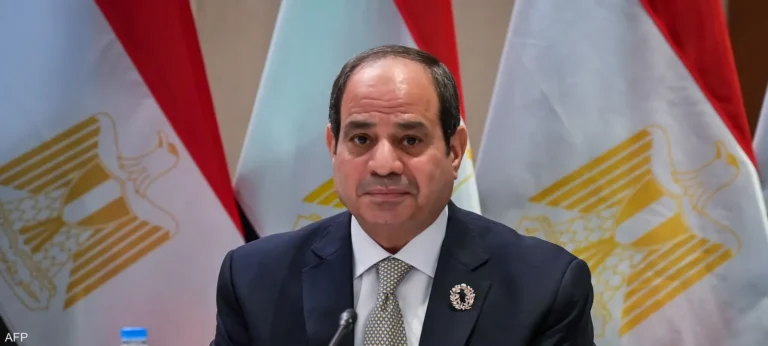
Cairo, Egypt – Egyptian President Abdel Fattah al-Sisi met this morning with Prime Minister Mostafa Madbouly to discuss a cabinet reshuffle. Ambassador Mohamed El-Shenawy, the official spokesperson for the Egyptian Presidency, stated that the President emphasized during the meeting the necessity for the new government to focus on achieving specific objectives, including national security and foreign policy, economic development, production, energy and food security, and human development. Furthermore, the government must undertake new tasks aligned with the purpose of the cabinet reshuffle. It is expected that the anticipated cabinet reshuffle will be presented to the House of Representatives for parliamentary approval. There are also indications that Mostafa Madbouly will remain in his position as Prime Minister.
According to the Egyptian Constitution, the process of forming a government or conducting a cabinet reshuffle is subject to clear constitutional and legal rules. The President of the Republic selects the Prime Minister, and then all proposed ministerial candidates are presented to Parliament at once, in accordance with the House of Representatives’ internal regulations. Parliament cannot approve some names and reject others; rather, the vote is for the entire cabinet or its complete rejection. If the House of Representatives approves the cabinet, the Prime Minister and ministers take the constitutional oath before the President of the Republic, as stipulated in Article 165 of the Constitution. Following this, the government is directly eligible to assume its duties, not before Parliament as is sometimes believed.
According to the Constitution, the President retains the right to reappoint a sitting Prime Minister, as stipulated in Article 146. If Parliament rejects the proposed cabinet, this is considered a rejection of the Prime Minister himself, prompting the President to appoint another Prime Minister from the party or coalition holding a majority of parliamentary seats. Should this second cabinet also fail, the Constitution mandates the dissolution of Parliament. The statement emphasized that the Parliament’s internal regulations govern the procedures for presenting a cabinet reshuffle. Consultations take place between the President and the Prime Minister before the proposal is submitted to Parliament for approval or rejection, thus preserving constitutional and governmental stability in the country.