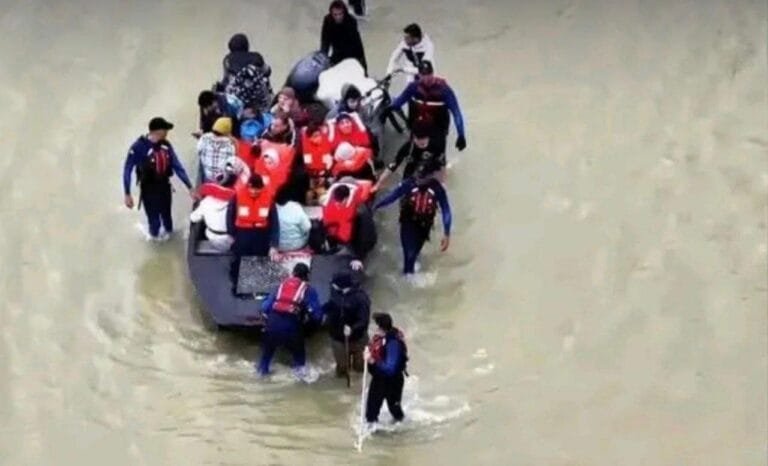
Rabat, Morocco – The suffering of residents in western and northwestern Morocco has deepened due to the catastrophic flooding of the Sebou River, which has killed at least 28 people and injured hundreds. Tens of thousands of residents have been evacuated from the worst-affected areas. According to the Ministry of the Interior, some 45,194 people have been evacuated from 12 communities in the Kenitra region alone. Authorities are continuing evacuations in other threatened areas. Furthermore, the Royal Gendarmerie and the Moroccan Army have rescued 1,200 people using helicopters. This comes as the river’s water level continues to rise, exceeding its normal capacity by 400%.
Widespread material damage and public anger
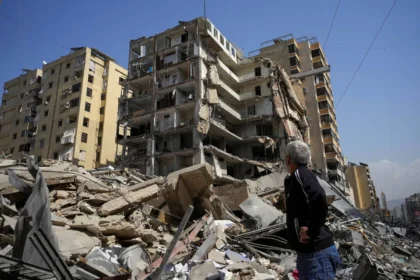
The collapse of bridges and the flooding of neighborhoods in Larache and Asilah destroyed 500 hectares of crops. Fifteen thousand homes were also partially or completely damaged, according to a report by the Moroccan Red Crescent. Meanwhile, economic losses are estimated at around 2 billion dirhams ($200 million). “We lost everything in minutes,” said Mohamed Ben Ali, a farmer from the village of Layaida. “The authorities have known about the danger of the wadi for years, but they didn’t repair the dams or build protective walls.” Fatima Zahra, a mother of three, pointed out that “our children are living in tents in the rain, and aid arrives late.” As a result, residents’ anger led to demonstrations in the squares of Kenitra and Larache, where protesters chanted slogans such as “Neglect is deadly” and “Where is the state?” They demanded that those responsible be held accountable. Human rights sources reported the arrest of 12 protesters during minor clashes with security forces.
Administrative shortcomings and lack of preparedness
The Moroccan Center for Volunteering and Citizenship revealed that the extent of the damage exposes “local management deficiencies linked to dilapidated infrastructure, weak urban planning, lax licensing, and a lack of maintenance and proactive measures.” The center added that these failures “necessitate accountability.” On the other hand, the center commended “the royal attention and the swift interventions of the armed forces and other agencies to ensure the evacuation and dignified sheltering of residents.” Fully equipped shelters with essential services were established, reflecting a model of proactive crisis management.
Government measures and international support
The government declared a state of emergency in the affected areas, allocating 500 million dirhams for immediate aid. Prime Minister Aziz Akhannouch also pledged compensation of up to 100,000 dirhams for each affected family. Furthermore, the European Union expressed its solidarity with Morocco and promised €50 million in aid. Turkey also dispatched rescue teams to the affected regions.
Calls for the development of preventive policies
Experts, including Dr. Ahmed Cherkaoui from Mohammed V University, stressed the need to strengthen early warning systems and maintain dams. They also emphasized the importance of reviewing urban expansion in flood-prone areas, asserting that “the disaster was anticipated, but preparations were lacking.” A World Bank report indicated that Morocco faces 150 flood-prone valleys, with a 30% increase in rainfall intensity due to climate change. In light of these circumstances, the Moroccan Center for Volunteering and Citizenship called for a comprehensive national mobilization to bolster solidarity, support those affected, ensure property protection, maintain infrastructure, and secure essential goods at affordable prices. It also recommended expediting the implementation of natural disaster insurance.