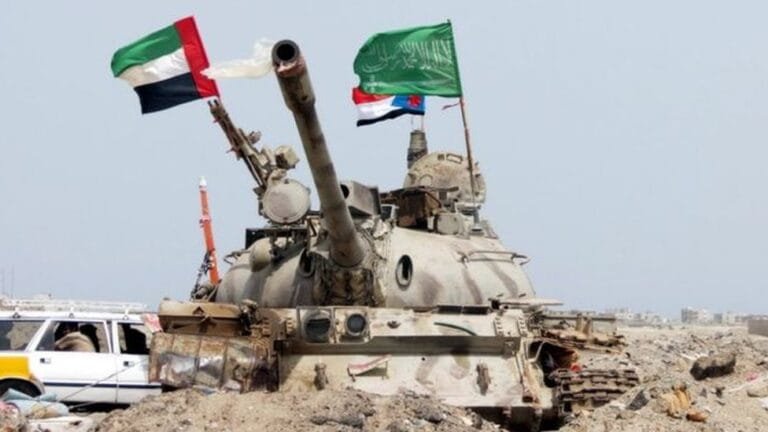
Aden, Yemen – Recent developments in southern Yemen have ushered in a new phase of reshaping the political and security landscape. These developments are unfolding amidst escalating external interventions and intensifying internal mobilization. However, there is also considerable uncertainty surrounding the future of governance and stability. Saudi Arabia has emerged as the most prominent external actor, having assumed almost sole control of the southern file following the diminished role of the UAE, which had been a key partner in recent years.
Saudi Arabia is unique in managing a complex void.
With the withdrawal of Emirati forces and the decline of Abu Dhabi’s influence, Riyadh faces an increasing challenge in managing the balance of power in the south on its own. Analysts believe this shift has revealed a potential miscalculation of the nature of local forces, most notably the Southern Transitional Council (STC), which is the most prominent political and military force on the ground. The STC’s loss of its main regional backer has put it on a collision course with new Saudi policies, exacerbating tensions.
Hadhramaut and Al-Mahra: The epicenter of the conflict
Riyadh viewed the expansion of the Southern Transitional Council’s influence in the Hadramawt and al-Mahra governorates as a direct threat to its security interests, particularly in border areas and strategic corridors.
In response, it resorted to political pressure and the use of air power to force the Council’s forces to retreat.
In the same vein, Saudi Arabia sponsored a conference in Riyadh aimed at “organizing” the southern political landscape. However, the conference, presented as a unifying platform, revealed the limited effectiveness of what observers describe as “political engineering” imposed from abroad, according to Air Observer.
Turning point and popular anger
Reports that representatives of the Southern Transitional Council were subjected to pressure in Riyadh, reaching the point of demands for the dissolution of their movement, marked a significant turning point.
These reports sparked widespread anger in Aden, which translated into mass demonstrations affirming continued popular support for the council’s president, Aidarus al-Zubaidi. His whereabouts remain undisclosed, further deepening the political uncertainty.
Escalating security and political repercussions
Despite the narratives promoted by Saudi-backed parties about the “disintegration” of the Southern Transitional Council (STC), the situation on the ground indicates otherwise, with direct repercussions of its marginalization emerging:
Escalating activity of extremist groups: The governorates of Aden and Abyan have witnessed a notable resurgence of activity by al-Qaeda in the Arabian Peninsula (AQAP) and insurgency networks. This occurred in areas that had enjoyed relative stability during the period when forces loyal to the STC were in control.
Restoration of northern dominance: The Presidential Leadership Council’s decisions to dismiss prominent southern figures, including al-Zubaidi, have deepened the sense of marginalization. This has revived historical fears of northern forces dominating state institutions.
A deepening crisis of confidence: Public distrust of the Presidential Council and Saudi intentions is growing. This crisis threatens to undermine any future political settlement.
Summary: South Yemen faces an uncertain future
Southern Yemen stands today at a critical crossroads, caught between attempts to reshape it through external arrangements, mounting internal pressures, and the very real threat of a resurgence of armed groups. Observers warn that marginalizing, rather than engaging, influential local forces could dismantle the structures that have provided a modicum of stability in recent years.
Without a genuine course correction and balanced international diplomatic pressure that takes into account the complexities and unique circumstances of the South, the situation could deteriorate into widespread security and humanitarian crisis. The repercussions of this would not be confined to Yemen alone, but would extend to the security and stability of the entire region.