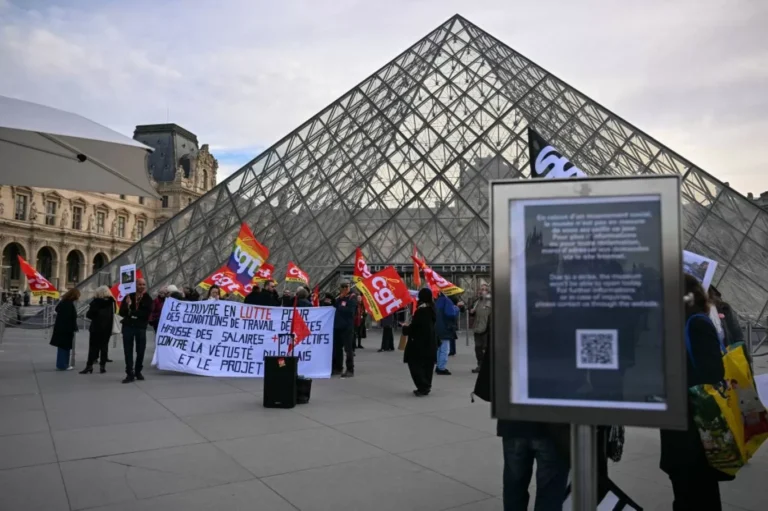
Paris, France – A sudden strike by employees of the Louvre, the world’s largest art museum, has caused financial losses exceeding one million euros in just a few days. This situation has sparked concern among French officials and those involved in the tourism and cultural sectors. The strike, which is a protest against working conditions and wages, has virtually halted visitor access. It has also affected the scheduling of exhibitions and art events within the museum. As a result, revenues have plummeted during a period that was expected to be very busy for tourists.
The Louvre management stated that the strike has led to the cancellation of numerous tours and the postponement of temporary exhibitions. This has directly impacted the museum’s income from admission tickets, souvenirs, and its cafes and restaurants. Initial estimates indicate financial losses exceeding one million euros. The strike continues without an agreement between management and the unions.
For their part, the unions considered the strike a “response to management’s disregard for employees’ basic demands,” emphasizing that improving working conditions and wages is essential to maintaining the quality of service provided to visitors and ensuring the museum’s continued status as one of the world’s most important cultural destinations.
Analysts believe the current crisis reflects broader challenges facing major cultural institutions in Europe. Employees are under increasing pressure due to the rising cost of living. This comes at a time when governments are trying to maintain tourism revenue without compromising the reputation of historical and cultural landmarks.
In Paris, the Louvre strike serves as an early warning for the tourism and cultural sector. Effective human resource management and internal conflict resolution have become crucial to avoiding further losses. This is especially true given the global competition for visitors and tourists, and the rising expectations for tourism following the easing of global restrictions and the resumption of international travel.