Washington, DC – US President Donald Trump warned on Tuesday, January 27, 2026, that Washington might halt its support for Iraq if former Prime Minister Nouri al-Maliki were to return to the premiership. This reflects a significant shift in US policy. In addition, it shows escalating pressure to curb the influence of pro-Tehran factions within the Baghdad government.
Very bad choice
In a post on Truth Social, Trump said he was hearing that Iraq might be headed for a “very bad option” by bringing Maliki back. He also asserted that Maliki’s previous term in office had led the country to “poverty and chaos.” He added that the United States “will not continue to help Iraq” if Maliki is re-elected. Finally, he concluded with a campaign slogan: “Make Iraq Great Again.”
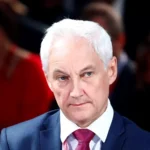
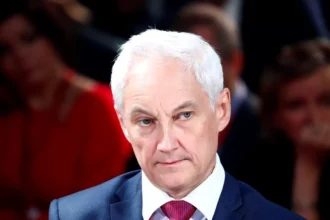
Trump’s statement comes days after the Coordination Framework (a coalition of influential Shiite forces in parliament) announced its nomination of Maliki for prime minister. The coalition justified its choice by citing his “political and administrative experience and his role in running the state.” Reports indicate that his nomination has reignited a heated internal debate. This is due to his controversial status. He faces criticism for exacerbating sectarian divisions during his previous term in office (2006-2014). He also faces criticism for failing to prevent the rise of ISIS in 2014. Nevertheless, Maliki retains significant political influence. In addition, he has close ties with pro-Iranian forces and factions.
Agreements within Parliament
According to the Iraqi constitution, the constitutional process for forming a government requires the election of a president by parliament. Following this, a prime minister is tasked with forming the government. This means that Maliki’s nomination remains contingent on the balance of power within parliament. It also depends on the positions of the Sunni and Kurdish blocs. In this context, some Sunni forces have publicly expressed reservations about the “recycling” of previous leaders. Conversely, other Sunni voices have emerged supporting his nomination. This reflects a division within the Sunni political establishment itself.
Washington’s pressure relies on multiple levers of influence, most notably security support encompassing training, arming, and intelligence sharing within extended cooperation programs. Published estimates indicate that the United States provided approximately $13.8 billion in funding between 2015 and 2023. This includes roughly $430 million in 2023 alone.
Part of this security cooperation is also linked to a bilateral security agreement signed in 2009 during al-Maliki’s premiership. Simultaneously, recent reports suggest that Washington is linking its stance on the formation of the new government to the issue of armed factions close to Iran. It is threatening to take impactful economic measures—including tightening or reducing dollar flows to Iraq—if these factions are not excluded. Alternatively, it may react if their influence within the country is not curtailed.
This escalation coincides with security complications related to ISIS. For example, the complications include the transfer of some ISIS detainees from detention centers in northeastern Syria to Iraq.