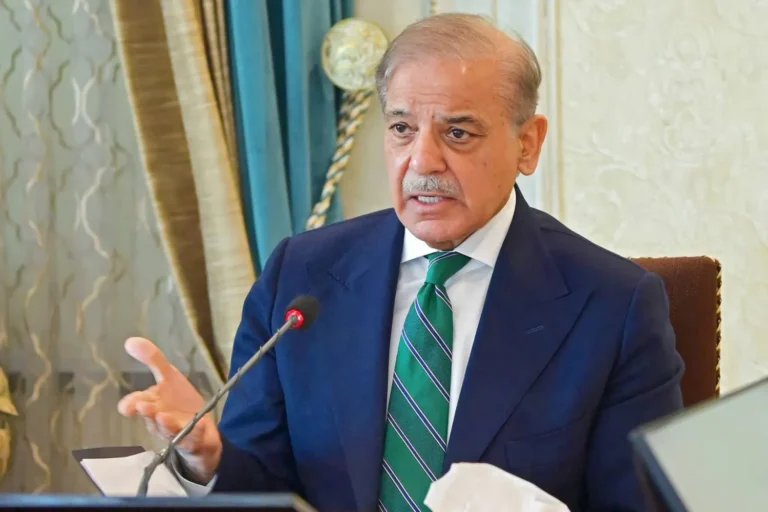
Islamabad, Pakistan – Pakistani Prime Minister Shehbaz Sharif said his country was “forced” to impose a complete trade embargo on Afghanistan due to what he described as the Afghan interim government’s failure to take serious action against terrorist groups operating from its territory. Speaking at a national workshop in Islamabad on Tuesday, Sharif explained that the closure of the Pakistan-Afghanistan border to trade, which has been in place since mid-October 2025, was not Pakistan’s preferred option. However, it came after repeated failures to reach security agreements, despite multiple rounds of talks and regional mediation efforts by Turkey and Qatar.
The Prime Minister stated, “There is a complete blockade on trade between Pakistan and Afghanistan. This should not have happened, but they forced it upon us.” He emphasized that the decision was directly linked to Kabul’s failure to curb the activities of terrorist groups, primarily the Pakistani Taliban and the Balochistan Liberation Army. He also pointed to what he described as external support for these groups. Sharif added that Pakistan still considers the Afghan people “brothers and sisters.” He affirmed that Islamabad does not seek to harm the Afghan people but is simply demanding that his government fulfill its security responsibilities. He said, “If the Afghan interim government has no interest in peace with Pakistan, it should at least have mercy on its own people.”
The Prime Minister pointed out that the 2020 Doha Accords clearly stipulated Afghanistan’s commitment not to allow its territory to be used to launch terrorist attacks against other countries. He asserted that Kabul “has not adhered to a single one” of the recommendations made during the bilateral meetings. While acknowledging that trade data shows Afghanistan has been more negatively impacted by the lockdown than Pakistan, Shahbaz Sharif admitted that the Pakistani business community has concerns about losses resulting from the cessation of trade. He stated, “What is good for Afghanistan is good for Pakistan, and vice versa.”
In his speech, Sharif addressed the issue of Afghan refugees, noting that Pakistan has hosted millions of refugees for decades. He stated that Pakistan has used its own resources, along with international aid, to meet their needs. He added, “We did not do a favor; we did our duty, but the way this is being rewarded is regrettable.” Domestically, the Prime Minister warned of a resurgence of terrorism, particularly in the provinces of Khyber Pakhtunkhwa and Balochistan. He asserted that the country had succeeded in almost completely eradicating terrorism by 2018, thanks to immense sacrifices, before the threats resurfaced.
Prime Minister Shahbaz Sharif stated that the release of extremist elements and the return of militants from Afghanistan were major factors in the renewed wave of violence. He emphasized that his government and the armed forces no longer distinguish between “good and bad Taliban.” He affirmed that the war on terror would continue “until it is completely eradicated.” The Prime Minister concluded his remarks by stressing that Pakistan would continue to exert its utmost efforts to ensure security and stability, both domestically and along its borders. This came despite what he described as attempts to “distort the sacrifices of martyrs” and spread hatred through social media.