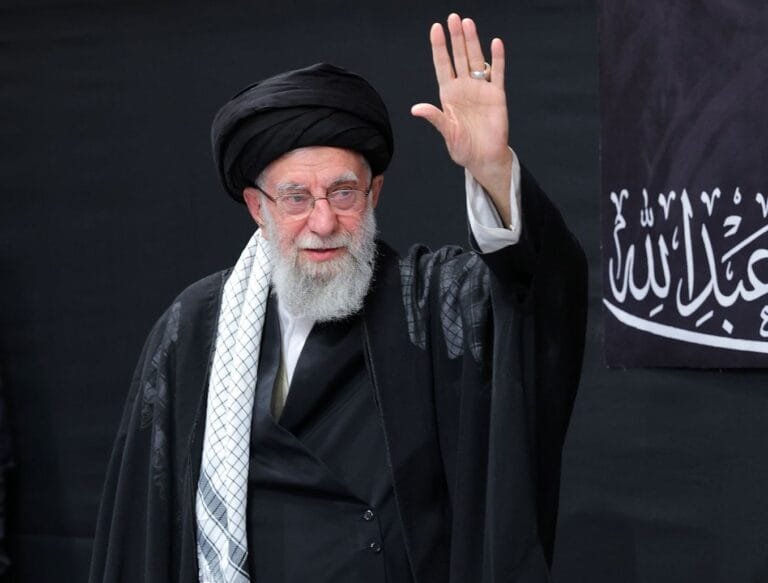
Tehran, Iran-The Iranian parliament’s National Security and Foreign Policy Committee warned that any attack targeting the Supreme Leader of the Islamic Republic, Ayatollah Ali Khamenei,
would trigger a religious edict (fatwa) calling for jihad, asserting that targeting him
would constitute a declaration of a wider war extending beyond Iran’s borders.
The Iranian Students’ News Agency (ISNA) quoted the committee on Tuesday as saying
that any harm to the Supreme Leader would be met with a comprehensive religious
and political response, emphasizing that such an attack “would no longer be considered an internal Iranian matter,”
but would be viewed as an attack on the entire Islamic world.
Fatwa on Jihad
She added that religious scholars would then issue a fatwa for jihad,
anticipating a response from “soldiers of Islam” in various regions.
This warning comes at a time of unprecedented escalation in relations between Tehran and Washington,
following widespread protests in several Iranian cities in recent weeks
and a subsequent violent security crackdown that has drawn sharp international criticism.
The United States has threatened to take punitive measures against Iran, considering the events a widespread violation of human rights.
In this context, US officials stated that Washington is “closely monitoring the situation,”
emphasizing that all options are on the table for dealing with Tehran’s behavior, without specifying the nature of these options.
The American statements are political
Tehran, for its part, considered the American statements to be part of “political
and psychological pressure” aimed at destabilizing the country internally.
The position of Supreme Leader is the highest political and religious authority in Iran,
wielding broad powers that include overseeing the armed forces and determining the regime’s general policies.
Since assuming the position in 1989, Khamenei has been viewed as the cornerstone of the Iranian regime’s survival.
Observers believe that the parliamentary committee’s warning falls within the framework of political
and religious deterrence messages intended to raise the cost of any potential escalation,
given the tense regional and international environment and the open possibility of further escalation between Iran and the United States.